
Designing Your Own Holiday Wrapping Paper With AI
Every December, the same roll of wrapping paper shows up under the tree. Snowmen, candy canes, maybe a reindeer in a scarf. It does the job, and then it goes into a trash bag by the armful.
There’s a more personal option sitting on most family computers right now. AI image tools can turn a simple idea into a repeating pattern you print at home, and the result looks like nothing you’d find in a store aisle. It can be your dog in a Santa hat, the view from your street in winter, or a doodle your seven-year-old made at the kitchen table, turned into a full sheet of paper.
It’s a small project. It’s also one of the better ways to get kids involved in the holidays as makers instead of just receivers.
Start With an Idea Only Your Family Would Have
The best homemade wrapping paper is a little bit of an inside joke. Before anyone opens an AI tool, sit down together and brainstorm what makes your family’s version of the season different.
Maybe it’s the cat that climbs the tree every year. Maybe it’s the annual pancake breakfast, the camping trip you took last summer or grandpa’s famous terrible sweater. Write a few ideas down. You’re looking for one or two simple subjects that would look good repeated across a sheet.
Keep the subject simple. A single object or character works far better than a busy scene. Patterns need breathing room, and a cluttered image turns into visual noise once it repeats.
Think about who’s getting the gift. A sheet covered in tiny soccer balls for the kid who lives in cleats says more than any tag could.
Writing a Prompt That Makes a Pattern
Most AI image generators respond well to plain descriptions. The trick for wrapping paper is asking for a pattern, not a picture.
A prompt might read something like: “A repeating pattern of small cartoon golden retrievers wearing red holiday scarves, scattered on a deep green background, flat illustration style, no text.” Words like “repeating pattern,” “tileable” and “scattered” tell the tool you want something that fills a sheet evenly.
Then experiment. Ask for the same idea in watercolor, in a retro mid-century style or as simple line drawings. Kids love this part, because every version comes back a little different and they get to vote.
Ask for no text. AI tools still tend to mangle letters, and a misspelled “Merry Christmas” isn’t the charm you’re after. Add names or messages later with a regular design app if you want them.
Save the ones you like right away. It’s easy to generate a dozen versions and lose track of the favorite.
Turning a Child’s Drawing Into Paper
Some of the most loved homemade wrapping paper starts with crayons, not a computer.
Have your child draw a few small holiday things on white paper: a star, a mitten, a lopsided tree. Snap a clear photo in good light. Many AI tools let you upload an image and ask for variations, or you can describe the drawing and ask the tool to make a pattern “in the style of a child’s crayon drawing.”
You can also skip AI for this part entirely. Most basic design apps can copy a single drawing and tile it across a page. The AI simply adds options, like new colors or a cleaner background.
Either way, a grandparent unwrapping a present covered in their grandkid’s artwork is going to keep that paper. Plan on it.
Printing Without the Headaches
Home printers aren’t built for giant rolls, so think in sheets. Standard letter or A4 paper works well for small gifts, books, jewelry boxes and gift cards. For bigger boxes, tape several printed sheets together on the inside where nobody sees the seams.
A few things make printing easier:
- Use a slightly heavier paper if your printer handles it. Thin paper tears at the corners and lets the box show through.
- Print a test page first. Colors on a screen often look brighter than they do on paper.
- Try kraft or brown paper for a rustic look. Darker designs show up well on it, and it feels handmade in the best way.
If you’d rather not print at home, local print shops and online printing services can produce larger sheets from your image file. Ask about paper size and finish before you order so the result folds nicely.
Make It a Family Workshop
The real value here isn’t the paper. It’s the afternoon.
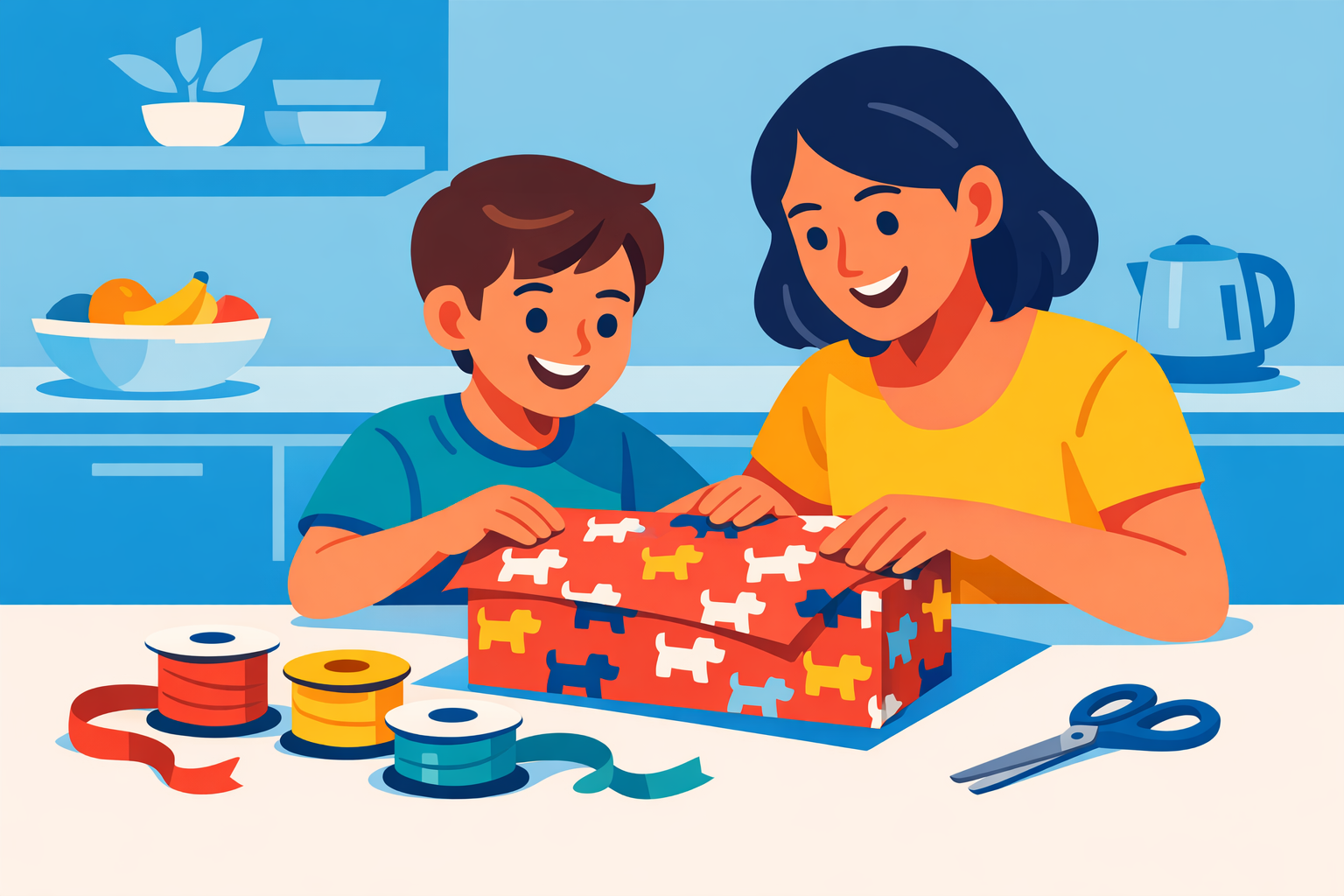
Set up a wrapping station with the printed sheets, tape, ribbon and a playlist. Let each kid design paper for one person on their list. They’ll think harder about that person than they would wandering a store, which is kind of the point of giving gifts in the first place.
This pairs nicely with other low-cost family projects. If you liked the idea of building a homemade board game with AI as your helper, wrapping paper is a quicker version of the same spirit: the tool sketches, the family decides.
It can also help with the budget. When the wrapping itself is personal, the gift inside doesn’t have to carry all the weight. Families working with a simple gift cap this year may find that a smaller present in hand-designed paper lands just as warmly.
A Few Ground Rules for Using AI Images
AI image tools come with their own house rules, and it’s worth a quick look before you start. Some free tools limit how many images you can make in a day. Some have terms about how images can be used. For wrapping a gift for Aunt Linda, you’re almost certainly fine, but read the terms if you plan to sell anything you make.
It’s also a good moment to talk with kids about where these images come from. The tool doesn’t “draw” the way they do. It builds images based on patterns it learned from enormous numbers of existing pictures. That conversation helps kids treat AI as a helper rather than magic, and it reinforces that their own crayon drawing is the most original thing in the room.
The Paper Is the First Gift
Store-bought wrapping paper exists to be torn off and forgotten. Homemade paper does something different. It tells the person, before they’ve even seen the gift, that someone thought about them specifically.
AI makes that easier than it used to be, but the idea is old. People have been decorating plain paper and brown parcels for generations. The tools changed. The impulse to make something personal for someone you love didn’t.
So this year, try one sheet. One dog in a scarf, one crayon star, one family joke. See what happens when the wrapping becomes part of the story.


