One Family Charging Spot and the Calmer Evenings It Brings
Look around your house at 9 p.m. and count the chargers. There’s one by the couch, one on the kitchen counter, two in the bedroom, one in the car that someone brought inside, and a tangle behind the TV that nobody wants to touch. Each one has a phone or tablet attached, glowing and waiting to buzz.
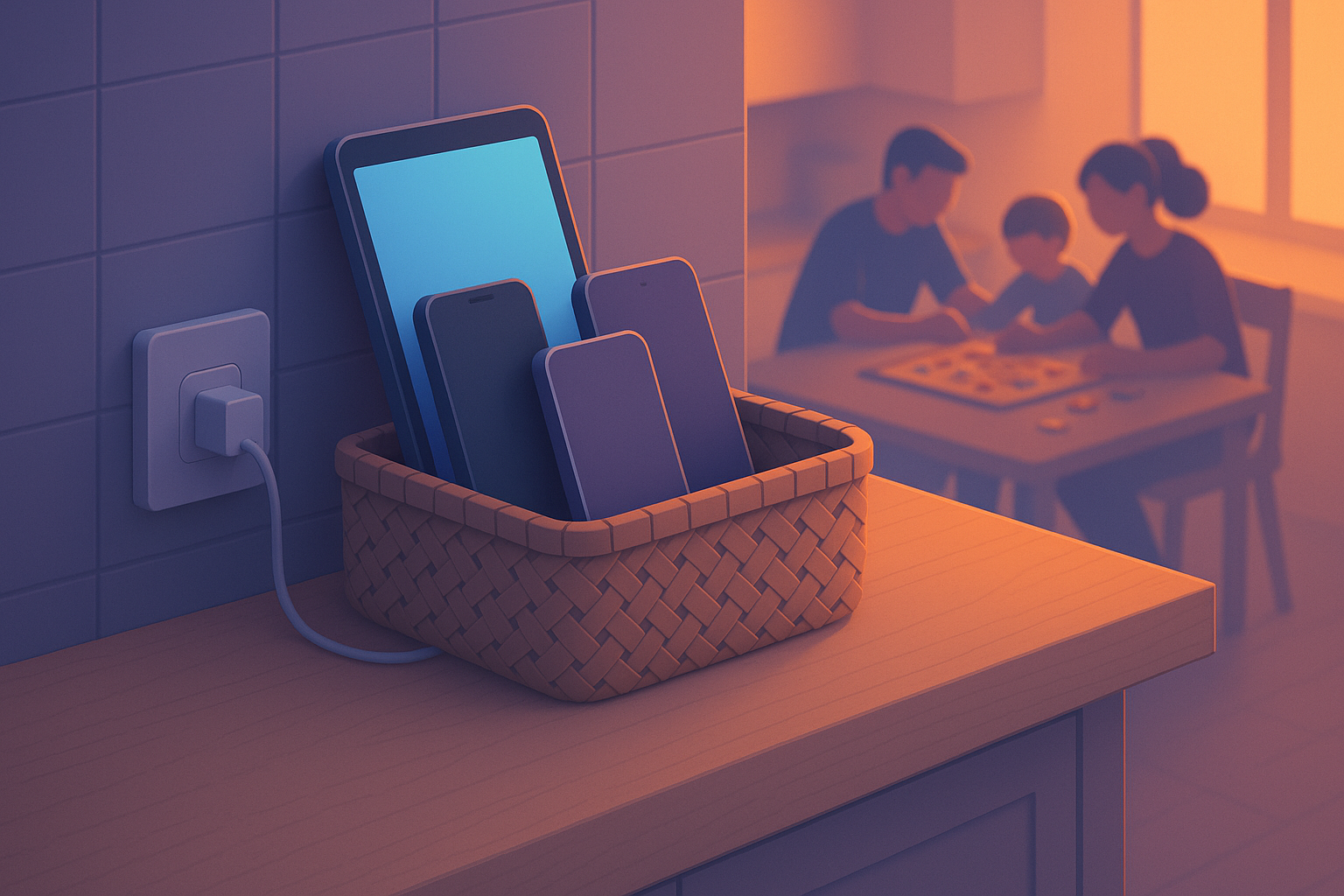
Now imagine all those devices in one place. A single shelf or basket where every phone in the house goes to charge at night.
It sounds like a small change. For a lot of families, it’s one of the easiest ways to take the evening back from screens without a single argument about screen time.
Why Chargers End Up Everywhere
Chargers multiply because devices multiply. Every new phone, tablet, watch and pair of earbuds needs power, and the easiest place to plug in is wherever you happen to be.
The result is that devices live in every room. A phone charging on the nightstand is a phone checked at midnight. A tablet charging by the couch is a tablet picked up during a movie. Convenience wins, and screens follow us around the house.
A family charging spot flips that around. Instead of devices coming to you, you go to them. That little bit of friction makes a bigger difference than you’d think.
What a Family Charging Spot Looks Like
There’s no special equipment required. A charging spot can be as simple as a power strip on a shelf, or as tidy as a dedicated charging station with slots for each device.
Pick a shared space. The kitchen, an entry hall or a home office works well. Avoid bedrooms, since the whole point is to keep devices out of them at night.
Keep it within reach but out of the way. A shelf, a counter corner or a drawer with a power strip inside are all good options.
Use a multi-port charger. One charger with several outlets cuts down on cables. Label cords with a bit of tape if family members use different types.
Add a basket or tray. It keeps things neat and gives everyone a clear place to drop their device.
If you have the space, keep a couple of spare cables at the spot for guests and visiting grandparents. It saves the nightly hunt for “a charger that fits,” and it keeps visitors from plugging in at the dinner table.
Some families like to add a small sign or a set time when devices “go to bed.” Kids especially enjoy being the one who announces it.
The Rules That Make It Work
A charging spot works best with a few simple agreements. Keep them short.
Devices charge here overnight. Phones, tablets and handheld games go to the charging spot at a set time each evening. The time can be different for kids and adults.
Everyone participates. This includes the grown-ups. Kids notice right away if parents keep their phones in their pockets.
Exceptions are okay. If someone is expecting an important call or uses their phone as an alarm, talk about it. A cheap alarm clock solves the alarm problem for many people.
No sneaking. For teens, be clear that taking a phone back to the bedroom after it’s docked isn’t part of the deal. Keep the tone friendly but firm.
Our piece on the case for a family tech curfew goes deeper on setting evening limits that stick.
What Changes When Devices Go to Bed
The most noticeable change is often sleep. Without phones on the nightstand, there’s less late-night scrolling and fewer middle-of-the-night notifications. Many people find it easier to fall asleep and harder to get distracted.
Evenings change too. Once devices are docked, people tend to drift toward other things: a book, a board game, a conversation, a walk with the dog. Nobody has to ban anything. The phones are just in another room.
Mornings can get calmer as well. When the first thing you see isn’t a screen full of messages, the day starts at a slightly slower pace. You can check your phone after breakfast, when you’re ready.
Making It Stick With Kids
Kids generally respond well to clear routines, especially ones that apply to everyone. Introduce the charging spot as a family experiment, not a punishment.
Let kids help set it up. They can pick the basket, decorate a label or choose where it goes. A little ownership makes the rule feel like theirs.
Start with a realistic time. If your teen is used to having their phone until midnight, docking it at 8 p.m. will feel like a big jump. Try a time that’s a step in the right direction, then adjust.
And talk about why. Kids are more willing to go along with rules when they understand the reason. Better sleep, fewer distractions and more family time are all easy to explain.
A Few Practical Tips
Turn off sounds at night. Set phones to do-not-disturb so the charging spot doesn’t buzz all evening. Our article on why fewer notifications make for calmer family dinners has more on trimming notifications.
Keep a landline or smart speaker handy if needed. If you’re worried about emergencies, a single device that can make calls is enough.
Watch for overheating. Leave a bit of space between devices and avoid stacking them while they charge.
Review after a few weeks. Talk as a family about what’s working and what’s not. Adjust the time or the rules as needed.
A Small Change With a Big Effect
Simple living isn’t about giving up technology. It’s about deciding where technology belongs in your home and your day. A family charging spot is one of the easiest ways to make that decision visible.
When all the phones are glowing together on one shelf in the kitchen, the rest of the house gets a little quieter. And in that quiet, families tend to find each other again, one evening at a time.