
How the Family Recipe Box Moved Online
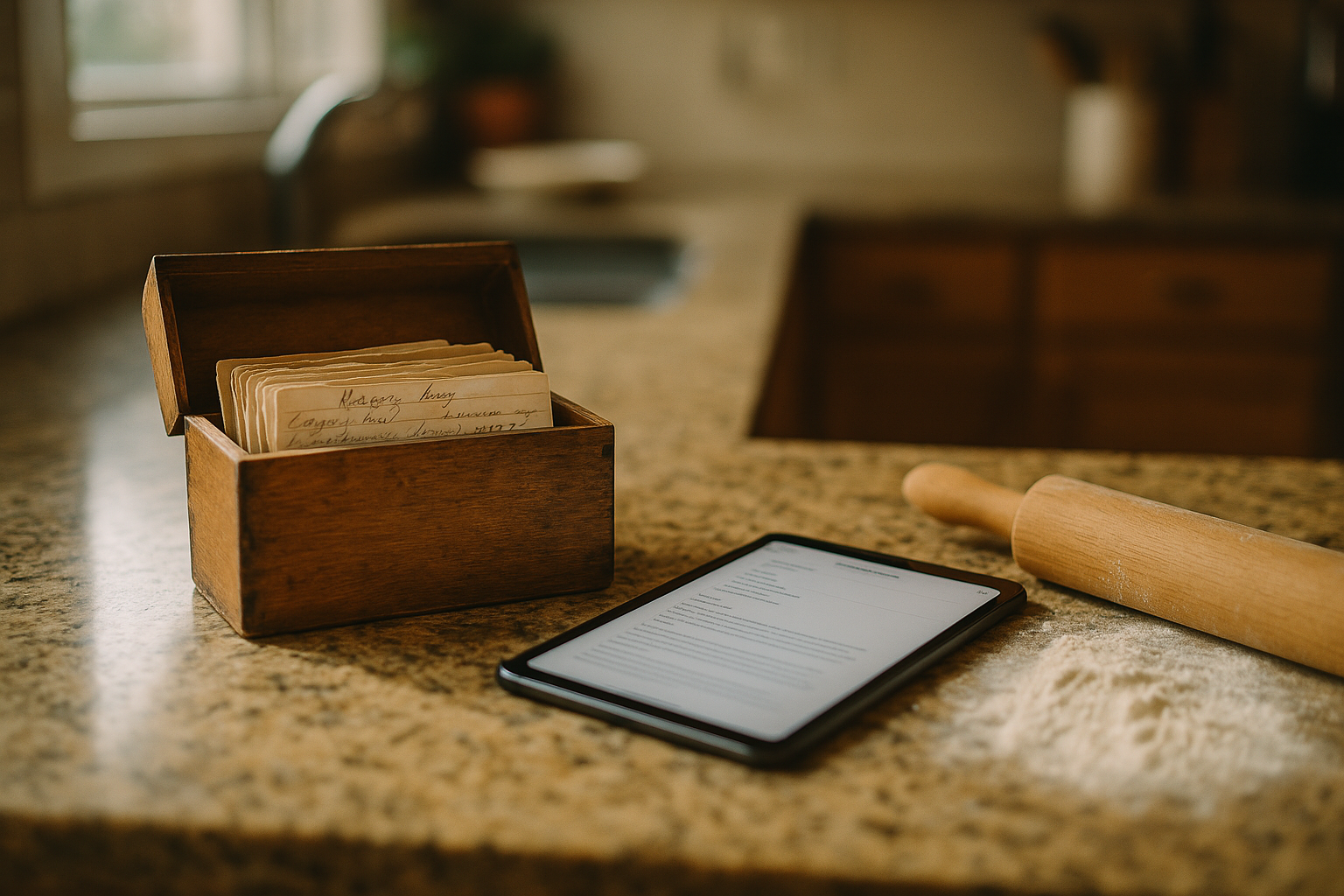
In a lot of kitchens, there used to be a small box on the counter. Usually wood or tin, sometimes painted, often a little greasy. Inside were index cards covered in handwriting: Grandma’s pot roast, a neighbor’s banana bread, a cookie recipe clipped from a magazine and taped to a card.
That recipe box was a family archive. It held instructions, but it also held people. You could tell who wrote each card by the handwriting, and you could tell which recipes got made the most by the stains.
Today most of us find recipes on a phone. How that happened is a small but telling chapter in internet history, and it says a lot about how families share food and memories.
The Recipe Box Era
Before the internet, recipes traveled by hand. You got them from family, friends, church cookbooks, newspaper food sections, magazines and the backs of product boxes. If you liked something at a potluck, you asked for the recipe, and somebody wrote it on a card.
Community cookbooks were a big part of this. Schools, churches and clubs collected recipes from members and printed them as fundraisers. Many families still have a few of these on a shelf, spiral-bound and full of names you recognize.
The system was slow, personal and a little chaotic. Recipes often skipped steps the writer considered obvious. “Bake until done” was a common instruction. But each card carried a story, and the box itself was a kind of family tree, organized by dish.
Early Online Recipe Sharing
When people started going online, recipes came along almost right away. Early internet discussion groups and bulletin boards had areas where people swapped recipes, asked cooking questions and argued about chili.
By the mid-1990s, dedicated recipe websites began to appear. They collected thousands of recipes in one place and, crucially, made them searchable. For the first time, you could type in “chicken” and “broccoli” and find dozens of ideas for what to make with what you had.
User reviews and ratings came next. Suddenly, a recipe came with a crowd of home cooks telling you whether it worked, what they changed and how long it really took. That was a big change from a single card with no notes.
The Food Blog Boom
In the 2000s, food blogs took off. Home cooks started writing about what they made, with photos, step-by-step instructions and lots of personal stories.
Food blogs made recipes feel personal again, in a way. You weren’t just reading instructions. You were reading about someone’s kitchen, their kids, their garden. Many readers loved this. Others just wanted the ingredient list and grew famously impatient with long introductions.
That tension led to one of the more practical inventions of the recipe internet: the “jump to recipe” button, which lets you skip straight to the instructions. It’s a small feature that tells you a lot about how people actually use recipes online.
Phones, Pins and Videos
Smartphones put recipes in the kitchen in a new way. Instead of printing a recipe or carrying a laptop to the counter, you could prop your phone against the flour canister.
Visual platforms changed how people discovered recipes. Pinterest, which launched in 2010, became a giant digital recipe box for many home cooks, full of saved ideas sorted onto boards. Video recipes on social media showed whole dishes being made in under a minute, from overhead, with hands moving fast.
Recipe apps added meal planners, shopping lists and the ability to scale ingredients up or down. The recipe box had become something you carried everywhere.
What Got Easier, and What Got Lost
The online recipe world is a huge gift for home cooks. You can find a recipe for almost anything, see how other people made it and learn techniques from video. Cooking a dish from another culture is easier than it has ever been.
But something got lost too. Online recipes rarely carry the personal history that a handwritten card did. A recipe from a website doesn’t have Aunt Ruth’s note that says “use more cinnamon than this.” And digital recipes saved in an app don’t get passed down the way a box on the counter did.
Many families are rediscovering that value. Some scan old recipe cards to preserve them. Others turn them into a printed family cookbook. Our guide to using AI to turn old family recipes into a printed cookbook walks through one way to do it.
Bringing the Two Together
You don’t have to choose between the recipe box and the internet. The best approach for many families is a bit of both.
Save the cards. If you have an old recipe box, scan or photograph every card. Keep the originals somewhere safe. Handwriting is irreplaceable.
Make a shared family collection. A shared document or recipe app can hold family favorites, so everyone can find Grandma’s stuffing on Thanksgiving morning.
Add the stories. When you save a family recipe, write a line about where it came from. Who made it, when it was served, what it means.
Write your own cards. Pick a few of your family’s current favorites and write them on cards by hand. Someday, someone will be glad you did.
If you’re curious about other ways technology has changed family life, our look at the early days of the family computer is a fun companion read.
Recipes Are Really About People
The way we store recipes has changed a lot. From cards in a box to pages on a screen to videos in a feed. The reason we keep them hasn’t changed at all.
A recipe is a way of saying “this is something we love, and we want you to have it too.” Whether it’s in a tin box or a phone, that’s worth holding onto. And this holiday season, as kitchens fill up again, it’s a good time to make sure the family favorites are written down somewhere, with a little of the story attached.
