Teaching Kids to Ask AI Better Questions
A ten-year-old types into a chatbot: “tell me about sharks.” The answer comes back as six long paragraphs about shark biology, evolution and conservation. The kid skims the first line, gets bored and wanders off.
Now picture the same kid typing: “I’m in fourth grade and I want three weird facts about sharks I can share with my class.” The answer is short, fun and exactly what they wanted. They read the whole thing and come back for more.
The difference isn’t the AI. It’s the question. Learning to ask good questions is one of the most useful skills kids can build, and AI tools turn out to be a great place to practice.
Why Questions Matter More Than Answers
Kids are growing up with tools that can answer almost anything. That’s powerful, but it means the hard part has moved. Finding an answer is easy. Asking for the right thing, and recognizing a good answer when you see it, is the real skill.
This applies far beyond AI. A child who can ask clear questions does better with teachers, librarians, doctors and coaches. They get more help because people understand what they need.
Practicing with AI is low-stakes and quick. Kids can try a question, see what comes back, change it and try again. That loop teaches more about clear thinking than a lot of worksheets.
The Ingredients of a Good Question
You can teach kids a simple recipe for questions that get better answers. It works for younger kids with a little help and for teens on their own.
Say who you are. “I’m in third grade” or “I’m a beginner at chess” helps the tool pitch its answer at the right level.
Say what you want. Facts, an explanation, ideas, a list, a story, a step-by-step guide. Being specific changes the whole response.
Say how much. “In three sentences” or “five ideas” keeps answers from getting long and boring.
Say why, if it helps. “For a school project” or “so I can explain it to my little brother” gives useful context.
Put together, a vague question like “volcanoes” becomes “I’m in fifth grade. Explain how a volcano erupts in a short paragraph, like you’re talking to a friend.” That’s a question with a much better shot at a good answer.
Practice Together First
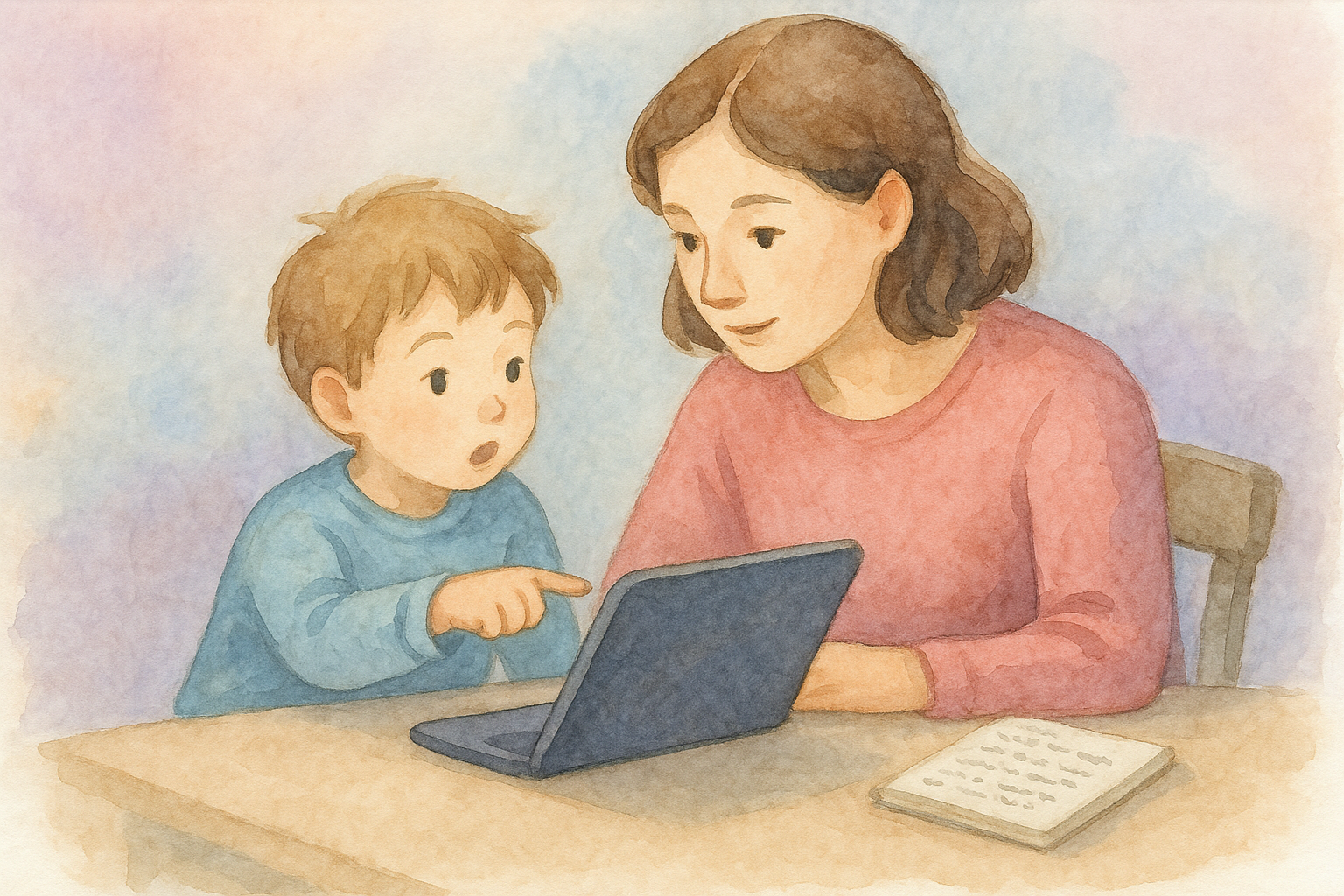
For younger kids, the best way to start is side by side. Sit beside them at the computer or tablet and take turns asking questions.
Try a little experiment. Ask the same thing two ways, once vague and once specific, and compare the answers. Kids are quick to spot the difference, and it turns the lesson into a game.
Then let them lead. Ask what they’re curious about and help them shape the question. Resist the urge to type it for them. Their words, with a bit of coaching, stick better than yours.
Older kids and teens can practice on their own, with an occasional check-in. Ask them to show you a question that got a great answer and one that flopped. Talking through why is a quick, useful lesson, and it keeps you in the loop.
Keep sessions short and fun. Ten minutes of asking about dinosaurs, space or why cats purr is plenty.
Follow-Up Questions Are Where Learning Happens
One of the best things about AI tools is that you can keep the conversation going. Teach kids that the first answer is a starting point, not the end.
Good follow-ups include “Can you explain that more simply?” or “What’s an example?” or “Why does that happen?” Kids who learn to ask these are learning to dig in, a habit that serves them in every subject.
It’s also a good chance to teach curiosity about the answer itself. “How do you know that?” is a great follow-up. It reminds kids that answers come from somewhere.
Teach Them to Check the Answer
Better questions lead to better answers, but AI can still be wrong. It can mix up facts, invent details or sound confident about something it doesn’t know.
Make checking a normal step. If an answer is going into homework or a conversation with friends, look it up in a second place: a library book, a trusted website, a teacher. Our guide to teaching kids to fact check AI has simple habits for this.
You can also teach kids to notice warning signs. An answer that seems too perfect, uses a strange number or contradicts something they learned in class is worth a second look.
Using These Skills for Schoolwork
Many kids will use AI tools at school or for homework. Asking good questions helps them use these tools to learn, rather than to skip learning.
Encourage questions that help them understand, like “Explain how fractions work, then give me one practice problem.” Steer away from questions that just get the answer, like “What’s the answer to number seven?”
Check what your child’s school allows, too. Rules vary, and some teachers want AI kept out of certain assignments entirely. Our piece on what parents should know about AI chatbots and homework covers the bigger questions.
Keep It Safe and Age-Appropriate
Choose tools designed for kids or with strong parental settings, especially for younger children. Many general AI chatbots have age requirements, so check before letting a child use one on their own.
Teach a simple privacy rule: don’t share your full name, school, address or photos with an AI tool. Questions can be specific without being personal.
And stay nearby, at least at first. Knowing what your child asks AI tells you a lot about what they’re curious about, and it gives you plenty to talk about at dinner.
Curiosity Is the Real Goal
In the end, teaching kids to ask AI better questions isn’t really about AI. It’s about curiosity, clear thinking and the confidence to keep asking until something makes sense.
The tools will change. The skill of asking a good question won’t. A kid who learns to say exactly what they want to know, and then checks whether the answer holds up, has learned something that will serve them for a long time.