Retiring Old Gadgets the Right Way Before New Ones Arrive
The holidays bring new gadgets into the house. A new phone, a tablet for a kid, a smart speaker, a laptop that finally replaces the one with the sticky keys. What usually doesn’t happen is anything at all with the old ones. They go into a drawer, still signed in, still holding years of photos and messages, and they stay there.
Retiring a device properly takes less time than most people think. Doing it before the new stuff arrives keeps the drawer from filling up and keeps your family’s information from sitting on hardware nobody’s watching.
Make a Quick Inventory
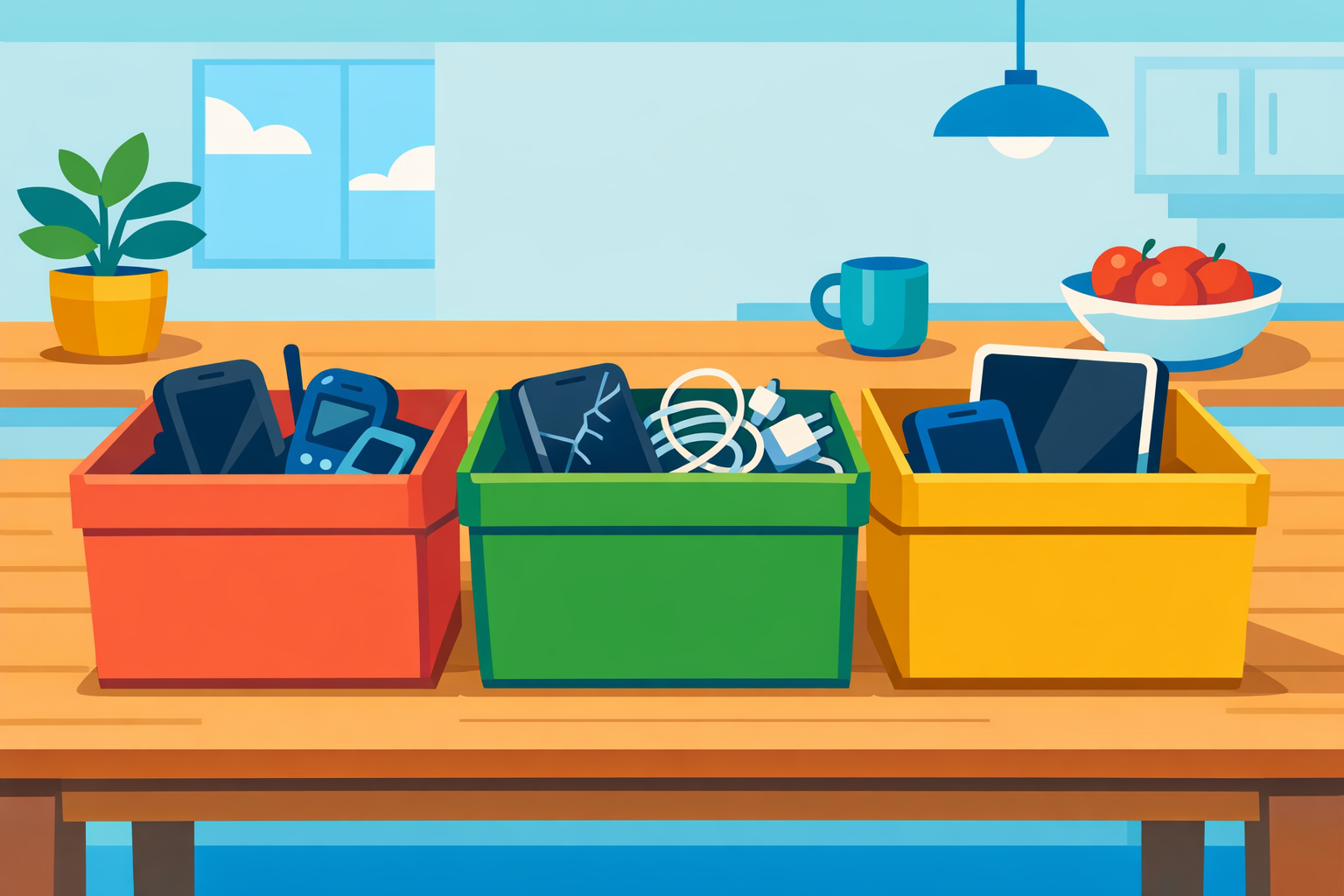
Start by gathering every device you plan to replace, plus anything already sitting unused. Check the junk drawer, the closet shelf and the bottom of the backpacks. Old phones, tablets, laptops, e-readers, fitness trackers, game controllers and chargers all count.
For each one, decide its next job:
- Hand it down to someone else in the family
- Sell or trade it in
- Donate it
- Recycle it
Writing that next to each device on a sticky note keeps the project moving. Our piece on the one in, one out rule for toys and gadgets is a handy way to keep this from piling up again next year.
Back Up What You Want to Keep
Before you wipe anything, make sure the things that matter are saved somewhere else. That usually means:
- Photos and videos
- Text message history, if you care about it
- Notes, voice memos and documents
- Two-step verification apps (more on that below)
- Game saves, if the kids will notice they’re gone
Most phones and tablets can back up to the manufacturer’s cloud service. Laptops can back up to an external drive or a cloud folder. Once the backup finishes, open it on the new device or online and confirm the photos are really there. A backup you haven’t checked is just a hope.
Move Your Two-Step Codes First
This is the step people skip and regret. If you use an authenticator app on your old phone to sign in to email, banking or work accounts, those codes may not move automatically.
Before you reset the old phone, open the authenticator app and look for a transfer or export option, or sign in to each account and add the new phone as a second device. Test a code or two on the new phone. Only then reset the old one.
If you keep passwords in a password manager, make sure you can sign in to it on the new device before wiping the old one, too.
Sign Out of Everything
Signing out does more than a reset alone, because many devices are tied to your account in ways a reset doesn’t always undo.
On phones and tablets, sign out of the main Apple or Google account. That usually turns off activation lock, a feature that blocks anyone else from setting the device up. If you skip this, the next owner may not be able to use it, and a donated phone that can’t be activated ends up as e-waste.
On laptops, sign out of your user account, cloud storage and any app stores. Also remove the device from your account’s list of trusted devices online, so it stops appearing as somewhere you’re signed in.
Don’t forget smaller gadgets. Smart speakers, streaming sticks and fitness trackers are often linked to an account through a phone app. Remove them there before you unplug them.
Reset to Factory Settings
Once you’ve backed up and signed out, run a full factory reset from the device’s settings menu. On modern phones and tablets, this erases the data in a way that’s very hard to recover, because storage is encrypted and the reset throws away the key.
For older laptops, look for the built-in reset or reinstall option. If it’s an old machine with a spinning hard drive and you’re worried about what’s on it, recycling programs that physically destroy drives are another option.
Pop out any SIM cards and memory cards before the device leaves the house. Those carry information too.
Hand-Me-Downs Need a Fresh Start
If the old phone or tablet is going to a child or grandparent, reset it fully anyway and set it up fresh under their account. It’s tempting to just hand it over still signed in as you, but then your messages, email and purchases come along with it.
Setting it up from scratch also gives you a chance to turn on parental controls, screen time limits or larger text, depending on who’s getting it.
Sell, Donate or Recycle
For devices that are leaving the family:
Trade-ins and resale work best for newer phones, tablets and laptops in good shape. Many carriers and retailers offer trade-in credit, especially during the holidays.
Donation gives a working device another life. Check that the organization accepts the type of device you have, and that you’ve removed activation lock.
Recycling is the right home for anything broken or too old to be useful. Electronics contain batteries and materials that don’t belong in the trash. Many electronics stores and local governments run drop-off programs. Swollen or damaged batteries should go to a proper battery recycling point, and shouldn’t be left in a drawer.
Deal With the Cable Tangle
While you’re at it, sort the chargers and cables. Keep what fits devices you still own, and recycle the rest along with the gadgets. A small labeled bin for the cables you keep makes it much easier to find the right one later. Fewer things to store and keep track of is part of why owning less actually costs you less.
A Lighter Drawer and a Safer Family
Retiring old gadgets is the least exciting part of getting new ones, and it’s one of the most useful. Your photos are saved, your accounts are tidy and nobody else ends up with a phone full of your family’s life.
Do it once, before the wrapping paper comes out, and the new devices start with a clean slate in a house that has a little more room.