The Ten-Minute Evening Reset That Makes School Mornings Easier
It’s 7:42 a.m. One shoe is missing. The permission slip that needed a signature is somewhere in a backpack, or maybe on the counter, or possibly in the recycling. Someone’s crying about lunch. The bus comes at 7:50.
Most chaotic school mornings aren’t really morning problems. They’re evening problems that show up twelve hours late. The decisions and small tasks that didn’t happen the night before all land at once, right when everyone is tired, hungry and short on time.
A short evening reset fixes a lot of that. Ten minutes, done most nights, can turn a scramble into a morning that mostly runs itself.
Why Evenings Are the Better Time
Mornings have a hard deadline. Evenings usually don’t. That makes the evening the natural time to handle the little stuff: finding things, making choices, signing papers.
Your brain is better at it, too, oddly enough. In the morning, every small decision competes with getting dressed, eating and getting out the door. In the evening, the same decision takes a few seconds and doesn’t feel urgent.
There’s also an emotional payoff. Going to bed knowing tomorrow is set up feels good. It’s one less thing to worry about at 2 a.m.
What Goes Into the Reset
The evening reset is a short checklist. Keep it simple and do the same things in the same order each night. This version works for many families with school-age kids.
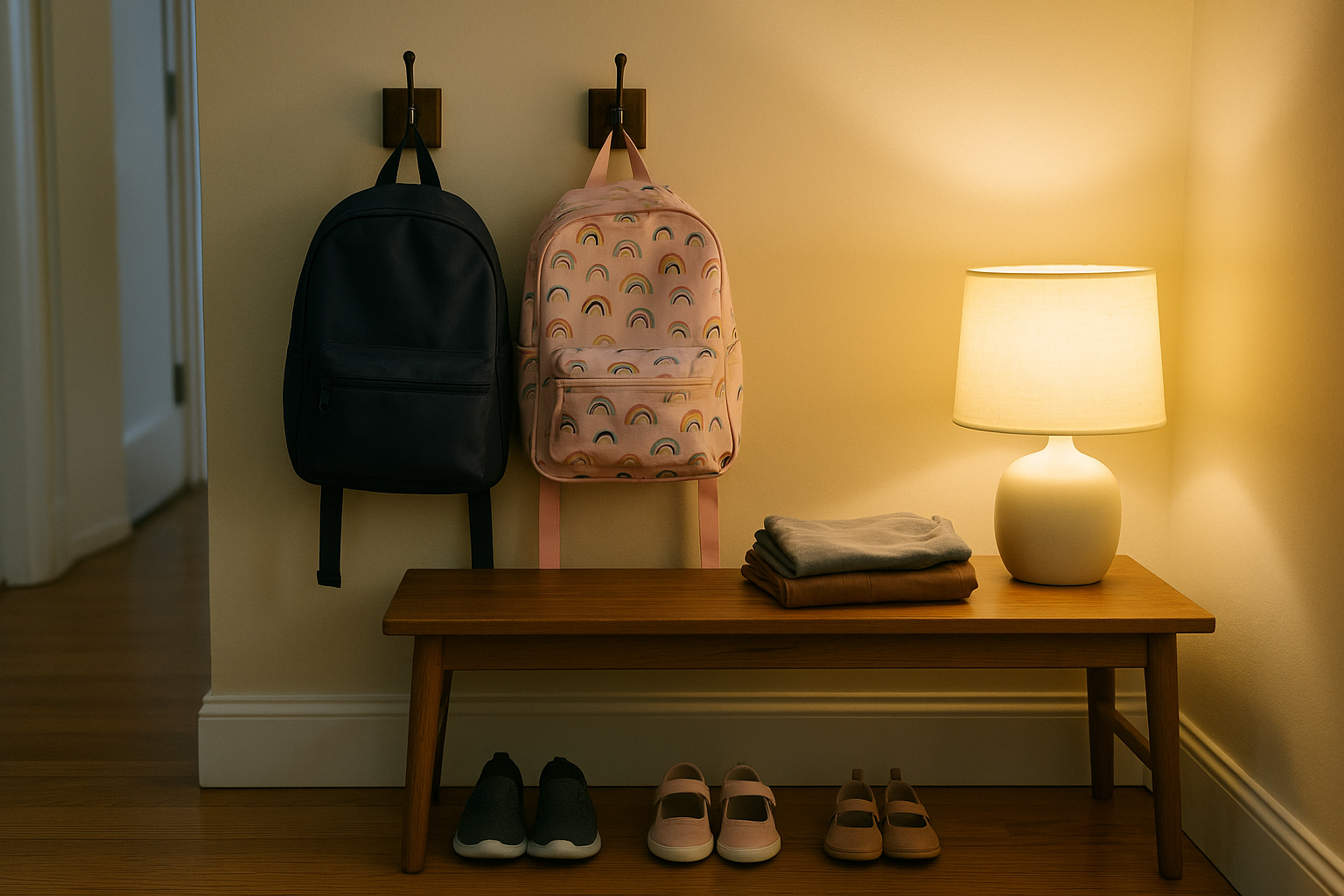
Backpacks packed and by the door. Homework in, folders in, anything that needs to go to school goes in tonight. Then the backpack goes to the same spot every night, ideally right by the door you leave from.
Papers checked and signed. Go through the take-home folder. Sign what needs signing. Put anything you need to keep on the fridge or in a single “paper” basket.
Clothes chosen. Kids pick tomorrow’s outfit and lay it out, including socks and shoes. Check the weather first so nobody’s surprised by rain.
Lunches planned or packed. If you make lunches, prep what you can tonight. Even just choosing what goes in them saves time.
Tomorrow’s calendar checked. Glance at the next day. Early practice? Library day? Picture day? Spotting it now avoids the last-minute panic.
That’s it. You don’t need every item every night, and you can add or remove things to fit your household.
Make It a Family Job
The evening reset works best when it isn’t one parent running around doing everything. Kids can handle a lot of it, and they’re more likely to remember things they did themselves.
Assign age-appropriate jobs. Younger kids can lay out their clothes and put their shoes by the door. Older kids can pack their own backpack, check their own calendar and make their own lunch.
A visual checklist helps, especially for younger children. Draw or print a simple list with pictures and post it near the door. Kids can check off each step, which turns it into a small game.
It also helps to make the reset happen at the same time each night. Right after dinner, or right before bath time, are both good anchors. When it becomes part of the routine, nobody has to argue about it.
The Two-Minute Kitchen Reset
While kids handle their part, a quick kitchen reset makes the morning smoother for the adults.
Run the dishwasher, or empty it if it’s done. Clear the counter of clutter. Set out bowls, cups and spoons for breakfast. If you drink coffee, get the coffee maker ready.
It’s a small thing. But walking into a clear, ready kitchen at 6:30 a.m. feels completely different from walking into last night’s dinner dishes.
If you like the idea of resetting the house in short bursts, our piece on the Sunday reset routine applies the same thinking to the whole week.
Keep Screens Out of the Way
The evening reset tends to go faster when screens aren’t competing for attention. Try doing it before devices come out for the evening, or make it the step right before devices go away for the night.
It’s also a good moment to charge things. Phones, tablets and school laptops all go to the charger so they’re ready in the morning. A dead school device at 7:45 a.m. is its own special kind of chaos.
Our guide to what to know before your kid gets a school-issued device has more tips for keeping school tech under control.
When the Evening Gets Away From You
Some nights, the reset won’t happen. A late practice, a sick kid or a long day at work will knock the routine off track. That’s normal.
When it does, try a mini version. Just two things: backpacks by the door and clothes laid out. Those two alone prevent a lot of morning trouble.
And don’t give up on the routine after a few missed nights. The point is to do it most of the time, not every single time.
How the Morning Changes
Once the evening reset becomes a habit, mornings tend to get noticeably calmer. There’s less searching, fewer surprises and more time for things like breakfast and actually talking to each other.
Kids benefit in quieter ways too. Starting the day without a scramble helps them arrive at school calmer and more ready to learn. Our article on building a morning routine that doesn’t start with a fight has more ideas for the morning side.
Ten Minutes Well Spent
Ten minutes in the evening can buy back a lot more than ten minutes in the morning. It buys calm, patience and a better start to the day.
It’s not a perfect system. Shoes will still go missing now and then. But when most of tomorrow is set up tonight, those small surprises stop being emergencies, and mornings start to feel like part of family life instead of a race against the bus.