
Fenceless Robots and the Friendly Future of Working Side by Side
If you’ve ever watched a video from inside a car factory, you’ve probably seen the big orange robot arms swinging car doors around like they weigh nothing. Look closely and you’ll notice something else. They’re almost always behind tall yellow fences or inside cages, with warning signs and locked gates.
There’s a simple reason for that. Those machines are strong, fast and focused on their job, and the older ones can’t tell the difference between a car part and a person who wandered too close. The fence keeps everybody safe.
Now the fences are starting to come down in some places, and that small change says a lot about the world our kids will grow up in.
What “Fenceless” Means in Plain English
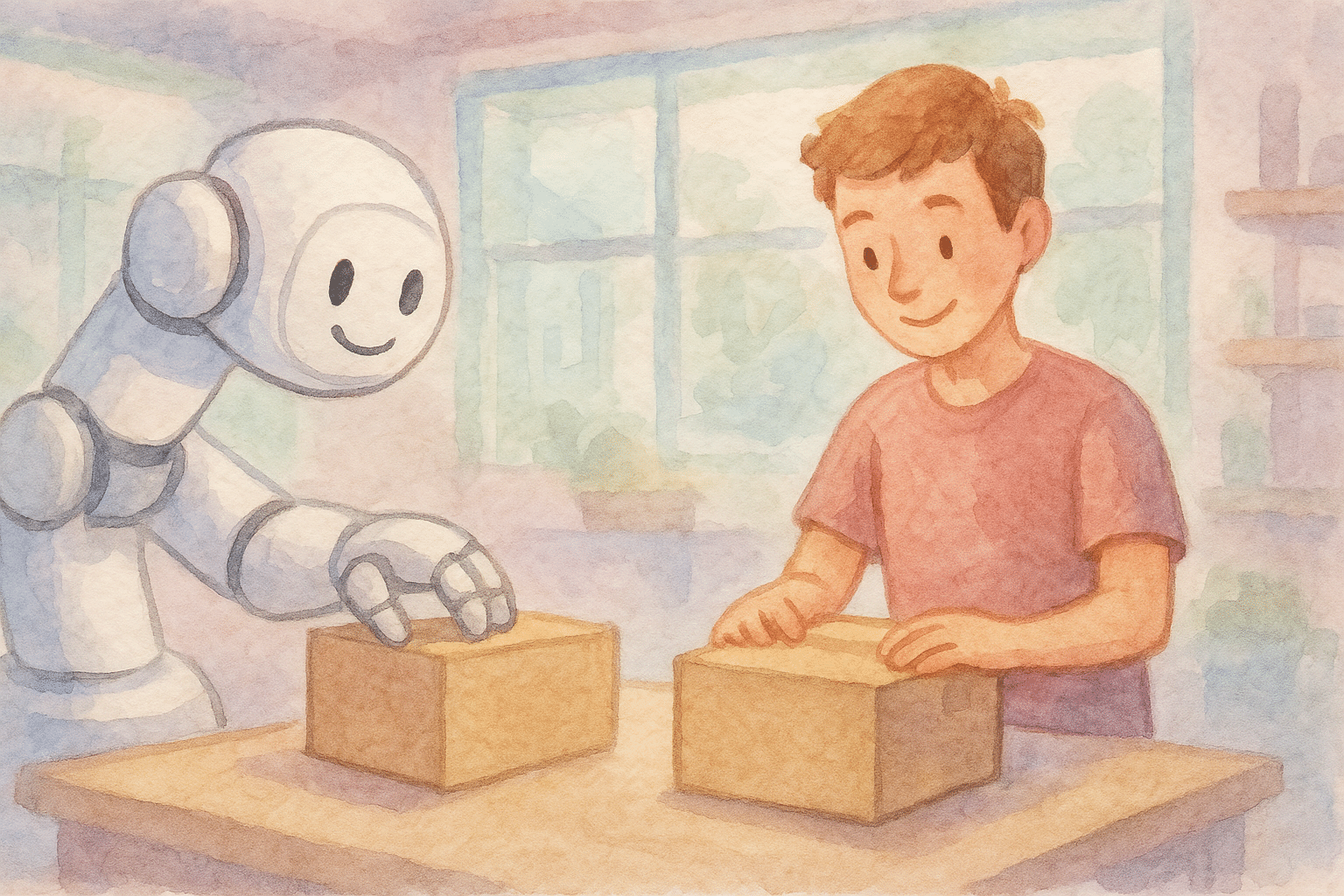
The idea behind fenceless robots is easy to picture. Instead of locking a robot away in its own little room, people and robots share the same space while the machine is working.
That only works because the robot is built to be careful around people. Some slow down as soon as someone steps nearby and speed back up when they move away. Some are designed to push so gently that bumping into one feels more like brushing a shopping cart than getting hit by a machine. Others stop the instant they touch something unexpected. Engineers follow international safety standards that spell out these approaches, and each workplace is supposed to check that the robot, the job and the space all add up to something safe.
You’ll sometimes hear these called “cobots,” short for collaborative robots. Think of a cobot as a coworker that’s very strong, very patient and very polite about personal space.
Where You’ll Find Them Today
Right now most of this happens where families don’t usually go: factories, warehouses and labs. Smaller robot arms help people assemble products, pack boxes or sort parts, working at the next spot on the table instead of behind a wall.
A newer and more eye-catching group is the humanoid robot, built roughly in our shape with two arms and sometimes two legs. Companies around the world are testing them on assembly lines, and governments are starting to write rules for them. This October, for example, South Korea’s government approved a test that lets a batch of humanoid robots work in spaces right next to people at several industrial sites. It’s a test, not a final answer, but it shows where things are heading.
You’ve probably met a distant cousin of these machines already. If your home has a robot vacuum that bumps into the couch, turns around and keeps going, you’ve seen the basic idea of a machine that shares your space and is built not to hurt anyone. Some restaurants and stores also have small rolling robots that bring food to tables or check shelves while customers walk by. Fenceless robots in factories take that same idea and apply it to much bigger, stronger machines.
Picturing a Day With Robot Helpers
Set the technical details aside and imagine a normal family week a little further down the road.
One parent works at a warehouse, where a robot partner lifts the heavy boxes onto high shelves while she handles the tricky orders that need a human eye. She comes home less sore than she used to. The other parent is a nurse, and a rolling helper carries supplies down the hospital hallway so he can spend more time with patients and less time fetching things.
At the grocery store on Saturday, a shelf-stocking robot works its way down the cereal aisle while shoppers push carts right past it. Nobody pays it much attention. That’s kind of the point. The best sign that fenceless robots have arrived will be how boring they seem.
Further out, a lot of people hope helpers like these could someday make life easier at home, especially for grandparents who want to stay in their own houses longer. A robot that can carry laundry up the stairs or fetch something from a high shelf without bumping into anyone would be a big deal for a lot of families. That’s still more hope than reality for most homes, and it’ll take time, testing and a lot of trust before it’s common.
What It Could Mean for Our Kids’ Jobs
Whenever robots come up, someone at the dinner table asks whether they’ll take everyone’s jobs. It’s a fair worry, and nobody can promise exactly how it’ll play out.
The fenceless idea points toward something a bit more hopeful, though. The whole design is built around people and machines working together, side by side, each doing the part they’re better at. Robots are great at lifting, repeating and not getting tired. People are great at noticing when something looks off, solving surprises, being kind to a customer and figuring out a better way to do the job.
Kids growing up now may work next to a robot the way earlier generations worked next to a forklift or a computer. The skills that help them most will probably be the very human ones: curiosity, teamwork, clear communication and a willingness to learn new tools. Our guide on how to talk to your kids about artificial intelligence has some easy ways to start that conversation.
Teaching Kids to Respect Even Friendly Machines
Fenceless doesn’t mean rule-free, and that’s a great lesson for children.
Gentle depends on the job. A careful robot arm that’s safe to stand next to while it sorts soft packages might need a fence again if someone hands it something sharp or very heavy. Safety comes from the whole setup, not from a friendly-looking robot.
Give machines room. Just like we teach kids not to walk behind a car that’s backing up, it’s smart to give any moving machine some space, even a cute one rolling down a store aisle.
Ask before touching. Robots in stores, museums and science centers belong to someone. If a child wants to get close, ask a staff member first. Most places with robots love curious kids and are happy to explain how they work.
These little habits sound simple, and they are. They’re the same kind of common sense that keeps kids safe around kitchen appliances, lawn mowers and parking lots.
A Fun Way to Explore It Together
Robots are one of those topics kids get excited about almost instantly. Look up a few videos of cobots and humanoid robots with your kids and talk about what you see. Which jobs look like fun to share with a robot? Which ones should always stay with people?
You might enjoy digging into our archive for some lighter robot moments too, like the time a Pepper robot learned to play bilboquet, the old cup-and-ball game. Watching a robot struggle with a toy a kid can master is a good reminder of how much people still bring to the table.
If your family likes building things, a simple robot kit or even a cardboard robot costume can turn the conversation into a weekend project.
Sharing the Floor
The fences around robots were never really about the robots. They were about keeping people safe from machines that didn’t know we were there. Taking those fences down only makes sense once the machines can notice us, slow down and make room.
That’s a pretty nice picture of the future to hand our kids. Robots don’t run the place in it, and people aren’t pushed aside. The strongest machine in the room has simply learned to share the space politely, and everyone still gets home safe for dinner.


