Keeping Kids Busy on a Long Holiday Car Ride Without Screens
About forty minutes into a long drive, the backseat starts to change. The snacks are gone, the window has stopped being interesting, and someone announces that they’re bored in a voice that carries to the front.
Tablets solve that problem fast, and there’s nothing wrong with using one for part of a trip. But a whole day of screens in the car can leave kids restless and carsick, and it takes away a stretch of time when a family is together with nowhere else to be. A mix of low-tech options gives you more to draw on when the battery dies or the patience runs out.
Start With the Plan, Not the Moment of Boredom
The best car activities are chosen before you leave. Once the complaining starts, you’re improvising while driving, and that’s a poor combination.
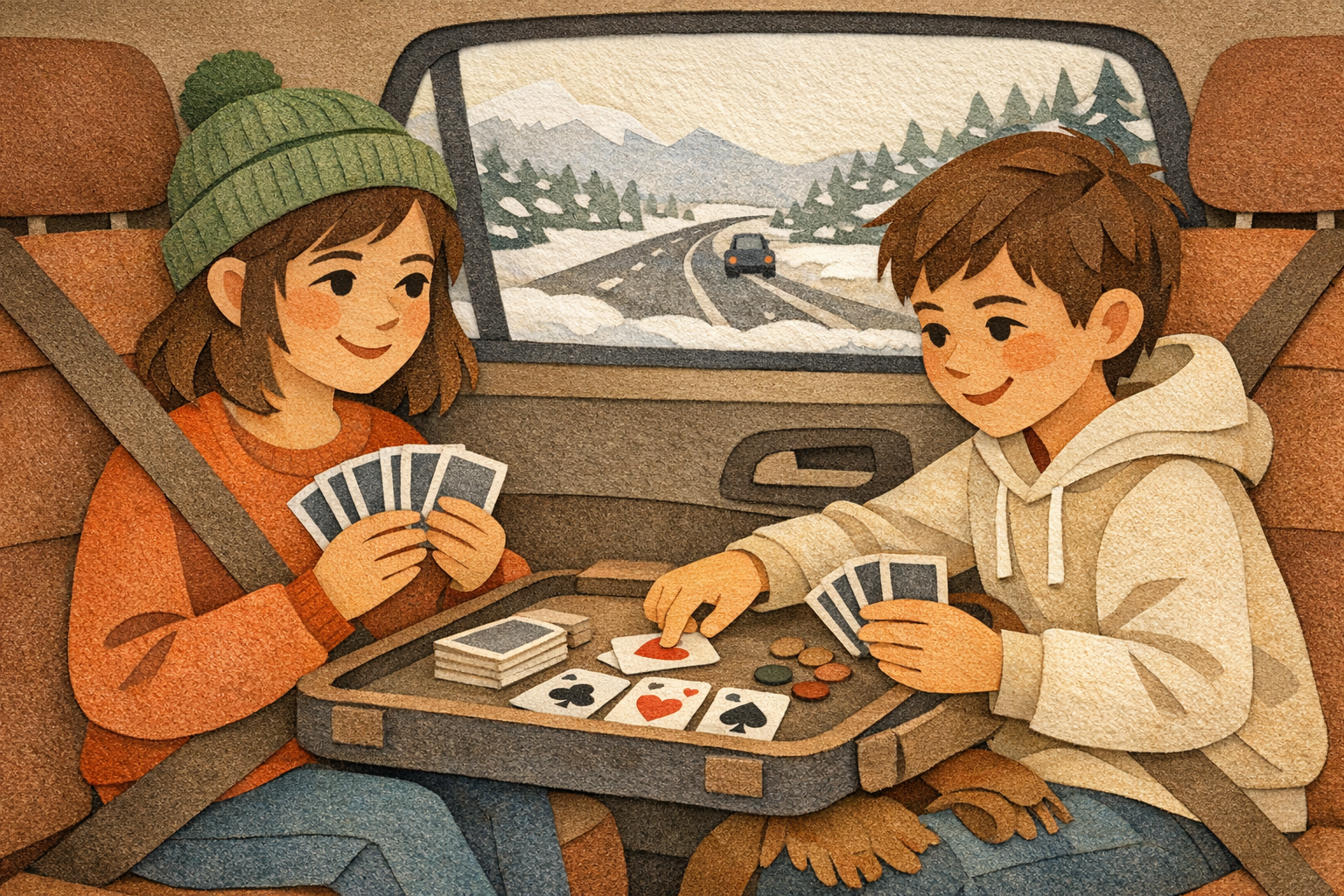
Spend ten minutes the night before packing a small bag for each child that stays within reach. Put in a few items that are new or haven’t been seen in a while: a deck of cards, a notebook, a few pens, a sticker book, a small puzzle, a favorite stuffed animal. Novelty buys time, so rotate things out of the toy bin a week before the trip so they feel fresh.
Wrap a few items. A cheap surprise opened at the two-hour mark has more pull than the same thing handed over at the start.
Games That Need Nothing but People
Some of the best options need no gear at all. They work in any seat, and they pull the driver in too.
Twenty questions is a classic for a reason. One person thinks of something, and everyone else asks yes-or-no questions until they guess it. A version for younger kids limits the choices to animals or foods.
Another standby is the alphabet game, where you look for each letter in order on signs and license plates. For readers, you can try a category chain: the first person names an animal, the next must name one that starts with the last letter of the previous word.
A story circle is another good choice. Someone starts with a sentence, and each person adds one. It tends to get silly in a short time, which is the point.
Pick games the driver can join without looking away. Anything that needs eyes on a board or cards is for the passengers. Anything spoken is for everyone.
Audio Is the Best Middle Ground
Listening is easier on the stomach than reading or watching, and it lets kids stare out the window if they want. Audiobooks and story podcasts can fill hours, and many libraries lend them through free apps with a library card.
Choose a story the whole car can enjoy, not just the youngest or oldest passenger. Chapter books read aloud work for a wide age range, and it’s common for parents to get hooked.
Make a playlist together as part of the planning. Each family member picks a few songs, and the rest of the car agrees to listen without complaint. Sing-alongs and a “guess the next song” game can make a long highway stretch pass faster than you’d expect.
If you want a fuller plan for the drive, planning a Thanksgiving road trip with kids before the rush covers timing, snacks and stops in more detail.
Use Stops as Part of the Entertainment
A break is more than a bathroom visit. Treat stops as the part of the trip that burns off energy, and the miles in between get easier.
Pick stops with a little room to move: a park, a rest area with grass, a trail near the highway. Ten minutes of running does more than another hour of snacks. Have a ball, a frisbee or a jump rope in the trunk where you can reach them.
Plan for stops earlier than you think you need them. Stopping before kids reach their limit is far easier than stopping after one has reached it.
Let the kids help with the map. Older ones can follow the route on a paper map or a phone and announce when you’ve crossed a county or a river. That’s a small job that makes them feel like part of the crew.
Snacks That Don’t Take Over the Car
Food is a big part of car entertainment, but it can go sideways. Choose snacks that are easy to eat, not sticky and unlikely to crumble into the seats.
Give each child their own container so there’s less arguing over who has more. A small bag with a mix of options works well, and a simple cooler at your feet means you aren’t reaching around mid-drive.
Water is the default drink. Bring a few extra napkins and a bag for trash that’s within reach of the back seat.
Know When a Screen Is Fine
Screens aren’t the enemy. A movie during the last hour of a long trip, when everyone is tired and still has miles to go, can save the afternoon.
The trick is deciding when. Many families hold screens until a set point, such as after lunch, or use them as a reward after a stretch of other activities. Setting that rule before the trip keeps you from negotiating while the car is moving.
If a child gets carsick, skip close-up screens and reading, and lean on audio. Fresh air, a view of the horizon and frequent stops can help too.
Save Some Room for Nothing
It’s easy to try to schedule every minute. Boredom, in small doses, is good for kids. A quiet stretch of staring out the window can lead to daydreams, questions and conversations that wouldn’t have happened otherwise.
So don’t fill every mile. Leave gaps, and see what shows up in them. Some of the best moments in a long drive come when no one is trying to entertain anyone, and a seven-year-old says something out of nowhere that makes the whole car laugh.
For more ideas about traveling with less tech in the mix, unplugging together and making family travel tech-free has a good starting point.