Turning Thanksgiving Leftovers Into a Week of Dinners With AI Help
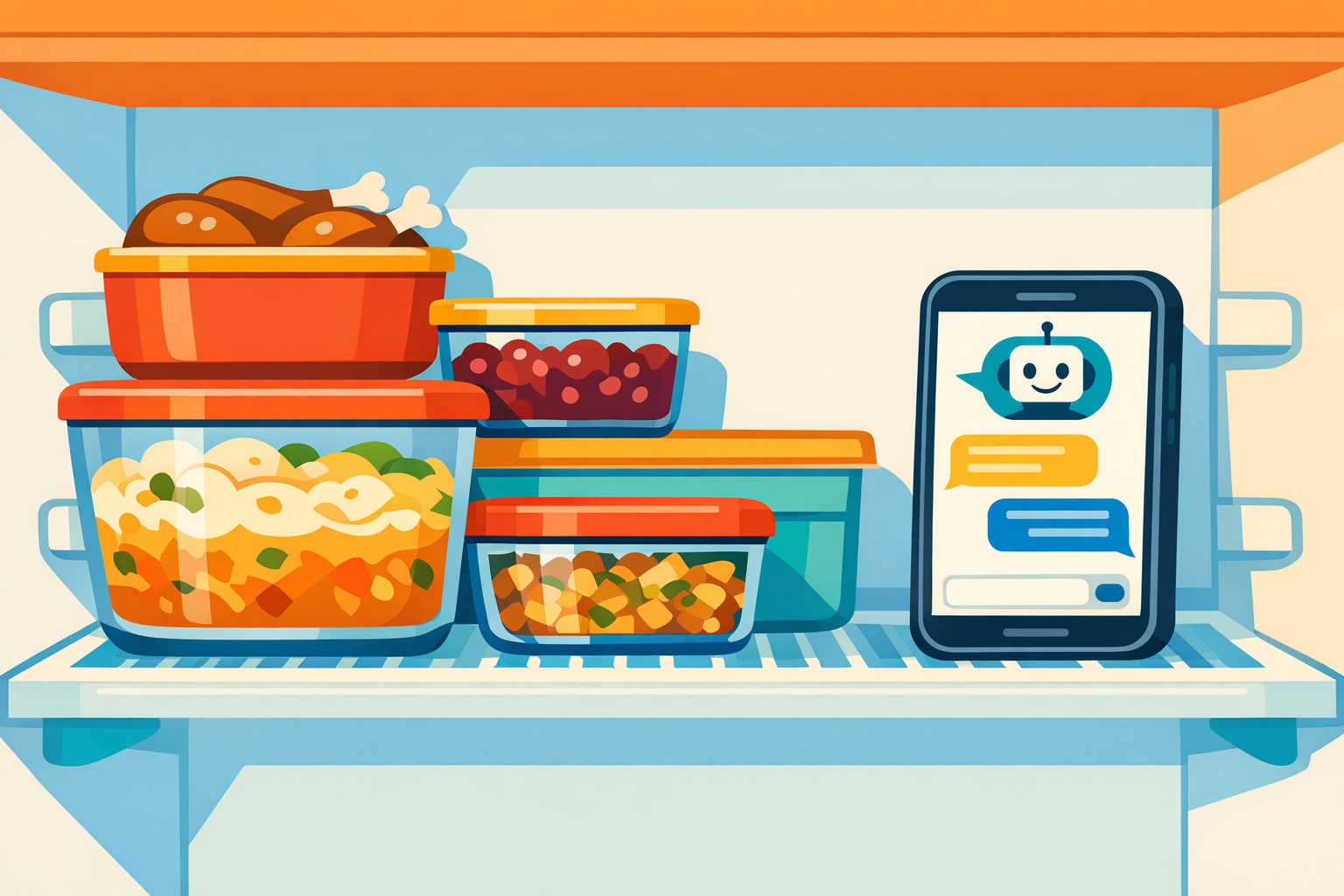
By Friday night the fridge looks like a game of Tetris nobody is winning. Half a turkey, a tub of stuffing, a bowl of cranberry sauce, mashed potatoes in three different containers and a pie with one lonely slice left. Everyone’s still full, and nobody wants a fourth turkey sandwich.
An AI chat assistant is good at exactly this kind of puzzle. You tell it what’s in the fridge, it suggests meals, and you decide which ones sound good. You don’t need a special app or any technical know-how. A plain chat window on your phone is enough.
Take Inventory Before You Ask
The assistant can only work with what you tell it, so start by listing what’s actually there. Don’t guess from memory. Open the containers.
Write down each item with a rough amount: “about four cups of turkey, a quart of mashed potatoes, half a pan of stuffing, one cup of cranberry sauce, six dinner rolls.” Add the other things you already have, like eggs, rice, pasta, canned broth and frozen vegetables, because those fill the gaps between holiday foods.
Note the clock on each item. Cooked turkey and sides are generally best eaten within a few days, and that’s a reason to plan the first meals around the most perishable things. If you’re unsure how long something keeps, check the guidance from your local food safety agency instead of trusting a chatbot’s memory on that point.
Tell It the Rules of Your House
A generic request gets a generic answer. “Give me leftover turkey ideas” returns the same sandwich-and-soup list you’ve seen a hundred times.
Give the assistant your real constraints instead. How many people are eating? Does anyone avoid dairy, gluten or nuts? Do the kids reject anything with visible vegetables? How much time do you have on a weeknight, and do you want to turn the oven on at all?
Here’s a prompt that works well: “I have the leftovers below. Plan five dinners for a family of four. Each should take under 30 minutes, and no two should taste like the same meal. One has to work for a picky eight-year-old.” Paste your inventory under it.
Ask for Meals That Don’t Look Like Leftovers
The trick to a leftover week that doesn’t feel like one is changing the format of the food. Turkey on a plate reads as yesterday’s dinner. Turkey in a quesadilla reads as dinner.
Ask the assistant for dishes that change the shape: fried rice, a casserole, a pot pie with the stuffing as the topping, a soup, a hash with potatoes and an egg on top. Mashed potatoes can become potato pancakes. Cranberry sauce can go into a sandwich spread or over yogurt.
If an idea sounds strange, ask for a simpler version. You can say “that’s too many steps, give me one with five ingredients or fewer,” and it will rewrite the plan.
Check the Output Like a Careful Cook
An assistant writes confident-sounding recipes, and some of them won’t work. Cooking times may be off, a ratio may be wrong, or it may assume you own a tool you don’t.
Read each recipe the way you’d read one from a friend who’s never seen your kitchen. Does the amount of liquid make sense for the pan? Does a time seem short for the size of the dish? When in doubt, cook by how the food looks and tastes, and use a thermometer for reheated meat and casseroles.
Treat any food safety advice from the chat as a starting point, not a final word. Reheating leftovers until they’re steaming hot all the way through is a habit worth keeping no matter what the recipe says.
Build the Week Around the Calendar
Once you’ve picked meals, ask for them in order. Put the dishes using the most perishable items first, and save anything that freezes well for later in the week or for the freezer.
You can also ask the assistant to build a short shopping list for whatever’s missing, such as tortillas, a block of cheese or a can of beans. Keep it short. Every item on that list is a small bet that you’ll cook it. The point of the week is to use what you’ve already bought, so a ten-item list is a sign the plan has drifted.
If your family’s evenings vary, mention it. “Wednesday we have soccer practice and eat at six” gets you a slow-cooker idea instead of a skillet one. For help planning around a full fridge on ordinary nights, using AI to plan weeknight dinners around what’s already in the fridge uses the same approach.
Freeze Early, Not Late
A fridge only holds so much, and a week is longer than most leftovers want to wait.
Leftovers you won’t get to by Sunday belong in the freezer today, not tomorrow. Portion turkey into flat bags, label them with the date, and squeeze out the air. Stuffing and mashed potatoes freeze better than you’d guess, and a soup base made from the carcass can go into jars.
Ask the assistant to suggest which of your items are good freezer candidates and which are better eaten fresh. Then double-check anything you’re unsure about against a reliable food-storage source.
If you were already thinking about a Thanksgiving menu that works for a mixed crowd, you may find that the same dietary notes you gave the assistant earlier carry straight over to the leftover plan.
A Calmer Fridge by Sunday
Planning leftovers takes about ten minutes, and it turns a pile of obligation into a handful of dinners you don’t have to think about. You’ll spend less, waste less, and skip the nightly “what are we eating” conversation for most of the week.
The assistant is a good brainstorming partner, but you’re still the cook. It offers ideas, you apply judgment about taste and safety, and the meals that come out of that partnership tend to be better than either would have produced alone.