Planning a Friendsgiving Where No One Host Carries Everything
Friendsgiving has a reputation for being the relaxed cousin of Thanksgiving. No seating politics, no great-aunt asking about your love life, just friends, food and a long table. Then someone volunteers to host, and by the Wednesday before, that person is up at midnight brining a turkey and wondering why they said yes.
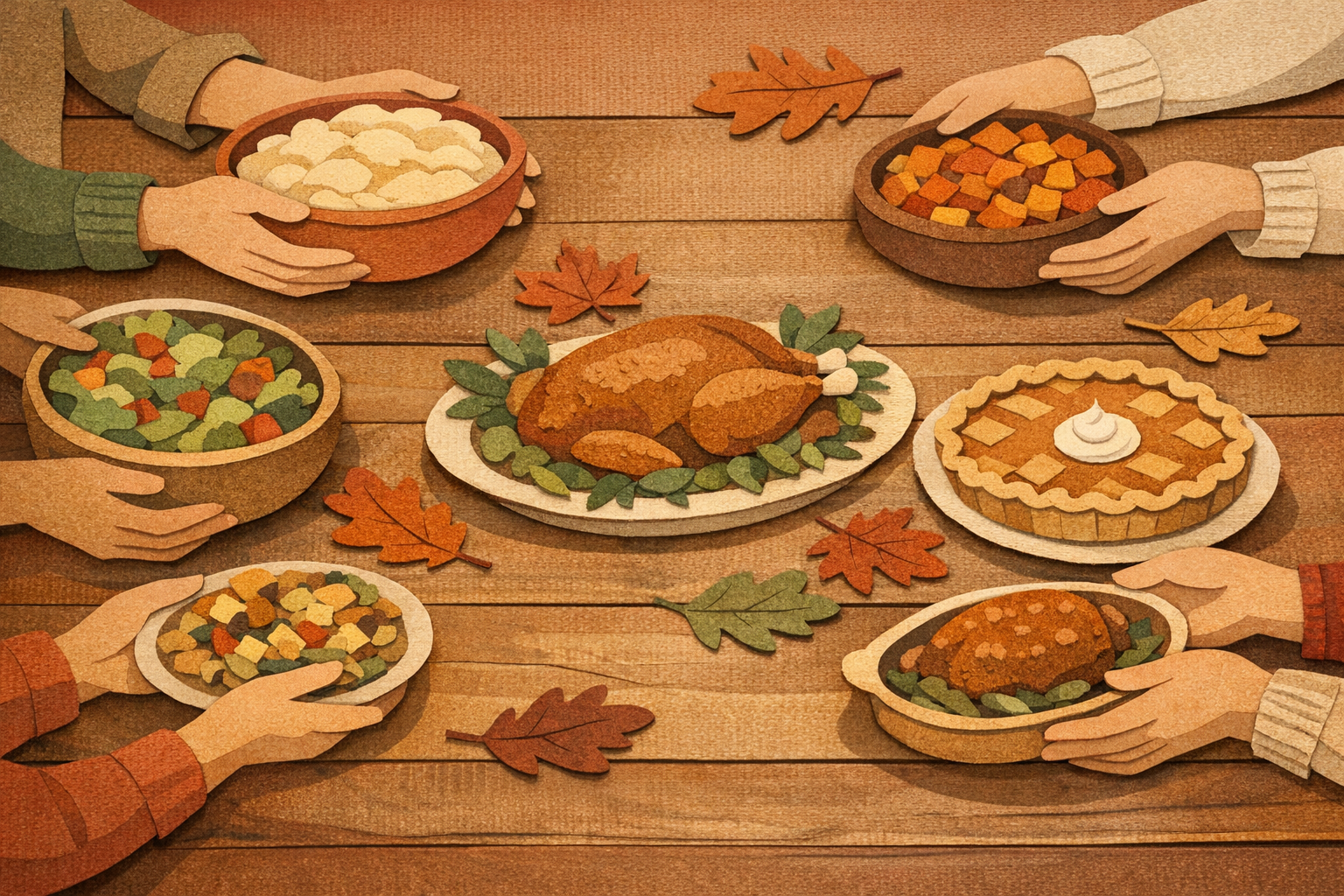
It doesn’t have to work that way. The whole spirit of Friendsgiving is a shared meal among people who chose each other, and the planning can be shared too. With a little organization up front, everyone contributes, nobody burns out and the host actually gets to enjoy the party.
Pick the Date Early and Keep It Flexible
Friendsgiving often happens the weekend before or after Thanksgiving, when people are home from family obligations or haven’t left yet. Those weekends fill up fast, so float a date in early November.
A quick group poll works better than a long chain of “what about Saturday?” messages. Offer two or three options and go with whatever most people can make. Someone will always miss it. That’s fine. Plan for the group you have.
Decide on a start time that suits families. If kids are coming, an afternoon meal is usually easier than a late dinner.
Split the Host Role Into Pieces
The word “host” tends to mean one person does everything. Break it into smaller jobs instead.
One person offers the space. Another handles the main dish. Someone else coordinates drinks. A fourth takes charge of cleanup, which is the most underrated job of the evening. When the tasks are spread out, the person whose home it is doesn’t end up as cook, bartender and dishwasher all at once.
It also helps to name one organizer who isn’t the person hosting. That organizer keeps the sign-up list, sends reminders and answers questions, so the host can focus on getting the house ready.
Use a Shared Sign-Up List
Potluck chaos is real. Without a plan, you’ll end up with four bags of rolls, three pies and no vegetables.
A shared document, a simple spreadsheet or a note in the group chat solves this. List the categories you need: main dish, two or three sides, a salad, bread, dessert, drinks and supplies like ice, foil containers and extra chairs. People sign up for what they want to bring.
Leave room for specialties. If someone makes a famous mac and cheese, let them claim it early. Friendsgiving is a great place for people to show off a dish they love.
Ask about dietary needs up front. A quick question in the sign-up list about vegetarian, gluten-free or allergy concerns keeps the menu friendly for everyone. If you want help working out a menu that covers a few different diets, an AI assistant can sketch options quickly; families have used the same approach to plan a Thanksgiving menu for a mixed crowd.
Make the Main Dish Manageable
A whole turkey is the classic choice, but it’s also the single biggest source of host stress. It needs oven space for hours and someone who knows what they’re doing.
Plenty of groups skip it or downsize. A turkey breast cooks faster than a whole bird. Some people pick up a precooked main from a grocery store or local restaurant. Others go with a completely different centerpiece, like a big pan of lasagna, a ham or a vegetarian dish everyone can share.
Splitting costs on the main dish is another option. If one person buys the turkey or ham, everyone can chip in a few dollars through a payment app, so the cost doesn’t land on one household.
Whatever you choose, assign it to someone who wants the job. If nobody does, that’s a clear sign to simplify.
Think About Space and Timing
The host’s kitchen can only do so much. One oven and four burners can’t heat ten dishes at once.
Ask guests to bring their food ready to serve or needing only a short warm-up. Slow cookers and insulated carriers help a lot here. It’s also smart to figure out serving dishes and utensils ahead of time, so nobody’s digging through cupboards while the gravy goes cold.
For people traveling from farther away, give them easy jobs that don’t depend on a kitchen when they arrive: drinks, bread, dessert or paper goods. If anyone’s driving in with kids, the same advice from planning a Thanksgiving road trip applies here too. Leave early and pack snacks.
Share the Cleanup Before It Starts
The most generous thing guests can do is help with cleanup, and the easiest way to make that happen is to plan it.
Set out a clearly marked trash and recycling spot. Have containers ready so people can take leftovers home. Ask two or three volunteers to take the dishes after dessert. When cleanup is a group job, it takes twenty minutes instead of a long, lonely evening for the host.
Send leftovers home. Most hosts don’t want a fridge full of other people’s side dishes. Make it clear that everyone takes their dish back.
Keep the Traditions Light
Some Friendsgivings have rituals: everyone shares something they’re grateful for, a group photo, a silly game after dinner. These can be the best part of the day. They work best when they’re simple and optional.
A gratitude round can be as short as one sentence each. A game can be something everyone already knows. The goal is connection, not a production.
If the holiday season is already full, keep the to-do list small. Friendsgiving should be a break from the rush, not another item to stress about, much like batching errands keeps the rest of the season from swallowing every weekend.
The Table Is the Point
Friendsgiving works because it’s built on choice. These are the people you’d invite to anything, gathered around food everyone made together.
When the work is shared, the meal feels shared too. Nobody’s exhausted, nobody’s resentful and the person whose home it is gets to sit down and eat. That’s a holiday worth repeating next year.