Helping Kids Handle Holiday Gift Money Wisely
Somewhere around the end of December, a kid opens a card from a relative and a few folded bills fall out. Maybe there’s a gift card tucked in there too. Within about ten minutes, that kid has a plan for every cent, and most of the plan involves a store.
That moment is one of the best money lessons of the year, and it’s easy to let it slide by. Holiday gift money is real money that belongs to the child, it arrives with no strings attached and it comes with a lot of excitement. Those three things together make it perfect practice.
You don’t need a spreadsheet or a lecture. You need a simple plan you set up before the cards arrive.
Decide the Rules Before the Envelopes Show Up
The hardest time to talk about saving is when a kid is holding cash and staring at a toy aisle. So have the conversation in early November, when nothing’s at stake yet.
Sit down and agree on how gift money works in your house. Some families keep it loose. Others use a simple split, with part to spend, part to save and part to give. There’s no correct formula. The point is that everyone knows the rules ahead of time, so nobody feels like money is being taken away later.
Write it down. A sticky note on the fridge is plenty. Kids are much more likely to accept a rule they helped shape and can see.
Keep it age-appropriate. A five-year-old can handle “half goes in the piggy bank.” A teenager can handle a conversation about a savings account and a goal months away.
Give the Money a Visible Home
Money that disappears into a parent’s wallet stops feeling real to a kid. It turns into a vague promise that it’s “being saved,” which isn’t very motivating.
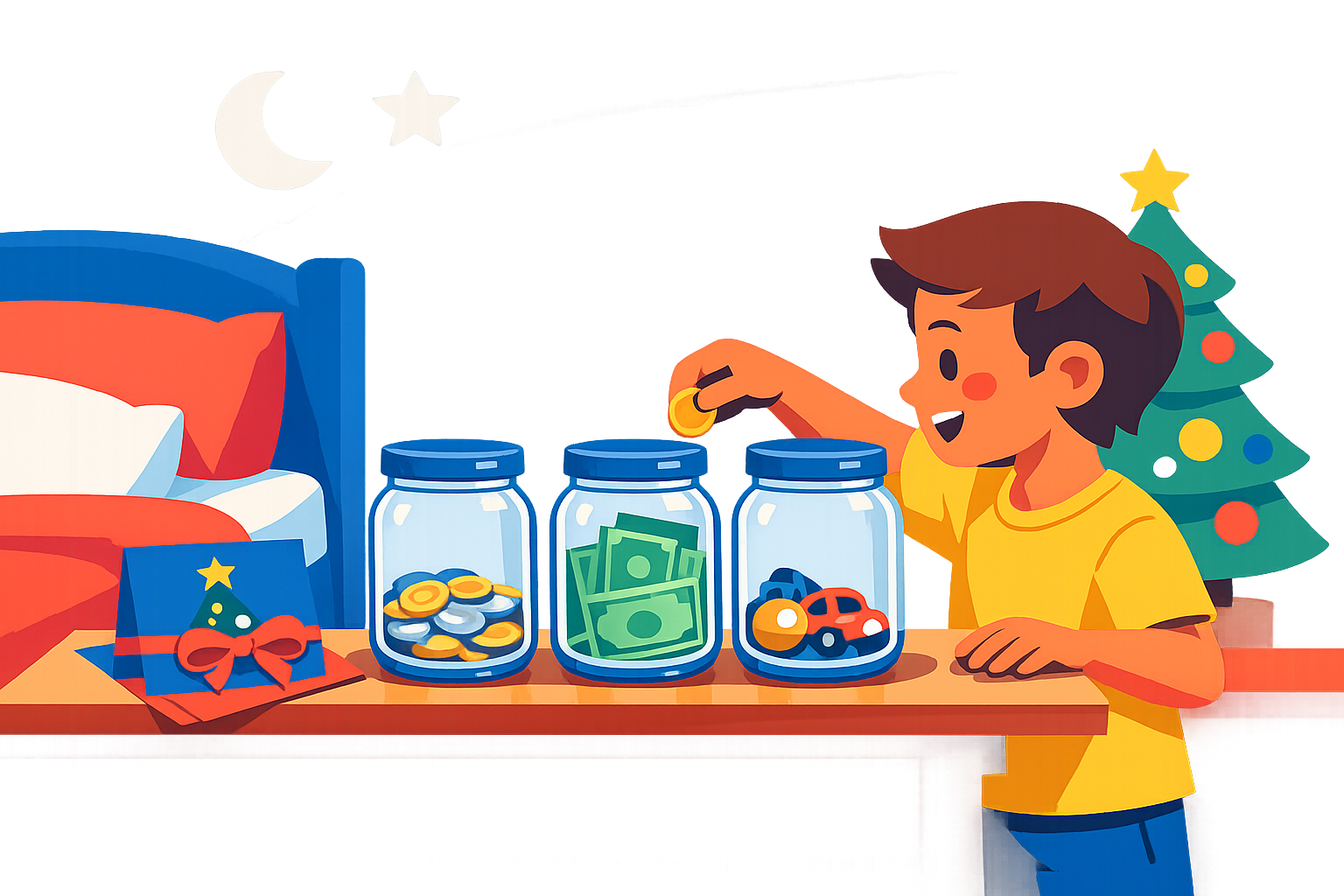
Younger kids do well with something they can see and touch. Clear jars work nicely, one for each bucket, so they can watch the savings pile up. Older kids might prefer a kids’ bank account or a youth debit card that a parent can oversee. Several banks and apps offer accounts built for minors; compare fees and parental controls before you pick one.
Whatever you choose, let the child put the money in themselves. That small act of depositing it builds a sense of ownership that’s hard to teach any other way.
Turn “I Want It” Into a Short Pause
Kids often want to spend gift money immediately, and sometimes that’s fine. It’s their money. But a short pause can turn an impulse buy into a real decision.
A simple rule many families like: wait a day or two before spending anything over a certain amount. If the kid still wants it after the wait, they buy it. Often they do. Sometimes they find they’ve moved on, and they get to keep the money for something better.
This connects nicely to a conversation you may have had earlier in the season. If you’ve talked about the difference between wants and needs before wish list season, gift money is where that idea gets tested with real dollars.
Let them make small mistakes. If a child spends everything on something that breaks in a week, that’s a cheap lesson. It’ll stick far better than any warning you could give.
Gift Cards Count Too
Gift cards feel like play money to many kids, and to plenty of adults. They’re easy to forget in a drawer and easy to spend without thinking.
Treat them like cash. Write the balance on a note, keep the cards in one spot and include them in the family plan. If a gift card is for a store your child doesn’t really use, it’s fine to talk about whether it might make a nice gift for someone else, or whether there’s something useful they could get with it.
It’s also worth checking the card’s terms together. Some cards have expiration dates or fees, depending on where you live and who issued them. Reading the fine print with a kid is a small but useful habit.
Saving Toward Something That Actually Excites Them
Saving for “someday” is abstract, especially for younger kids. Saving for a specific thing is a game.
Help your child pick a goal that costs more than their gift money alone. A bike, a bigger Lego set, a pair of shoes, a concert ticket. Then work out together how much they have and how much they still need. A simple chart on the bedroom door, filled in as they add birthday money or allowance, makes progress visible.
Adults use the same trick. A holiday sinking fund works because the money has one clear job. Kids respond to that clarity even more than grown-ups do.
Celebrate when they reach it. Let them buy the thing themselves, at the register, with their own money. That’s the moment the lesson lands.
Don’t Forget the Giving Bucket
The holidays are a natural time to talk about generosity, and gift money gives kids a way to practice it with their own funds.
Let your child choose where their giving money goes. It might be a local animal shelter, a food bank, a toy drive or a classmate’s family going through a hard time. When kids pick the cause, they care about it. When parents pick it, it’s just another chore.
Even a small amount matters to them. Dropping a few dollars into a donation box they chose teaches more than any speech about gratitude.
The Habit Is the Real Gift
The relatives who tuck money into holiday cards are giving something bigger than they probably realize. They’re giving a kid a chance to make choices with real stakes, at a time of year when the stakes are pleasantly low.
Most adults learned about money the hard way, through overdrafts and credit card statements. A child who practices with holiday cash at eight or twelve gets a head start on all of that. They learn that money can be spent, saved or shared, and that each choice feels different.
The amount in the card doesn’t really matter. The habits a kid builds with it might last a lifetime.