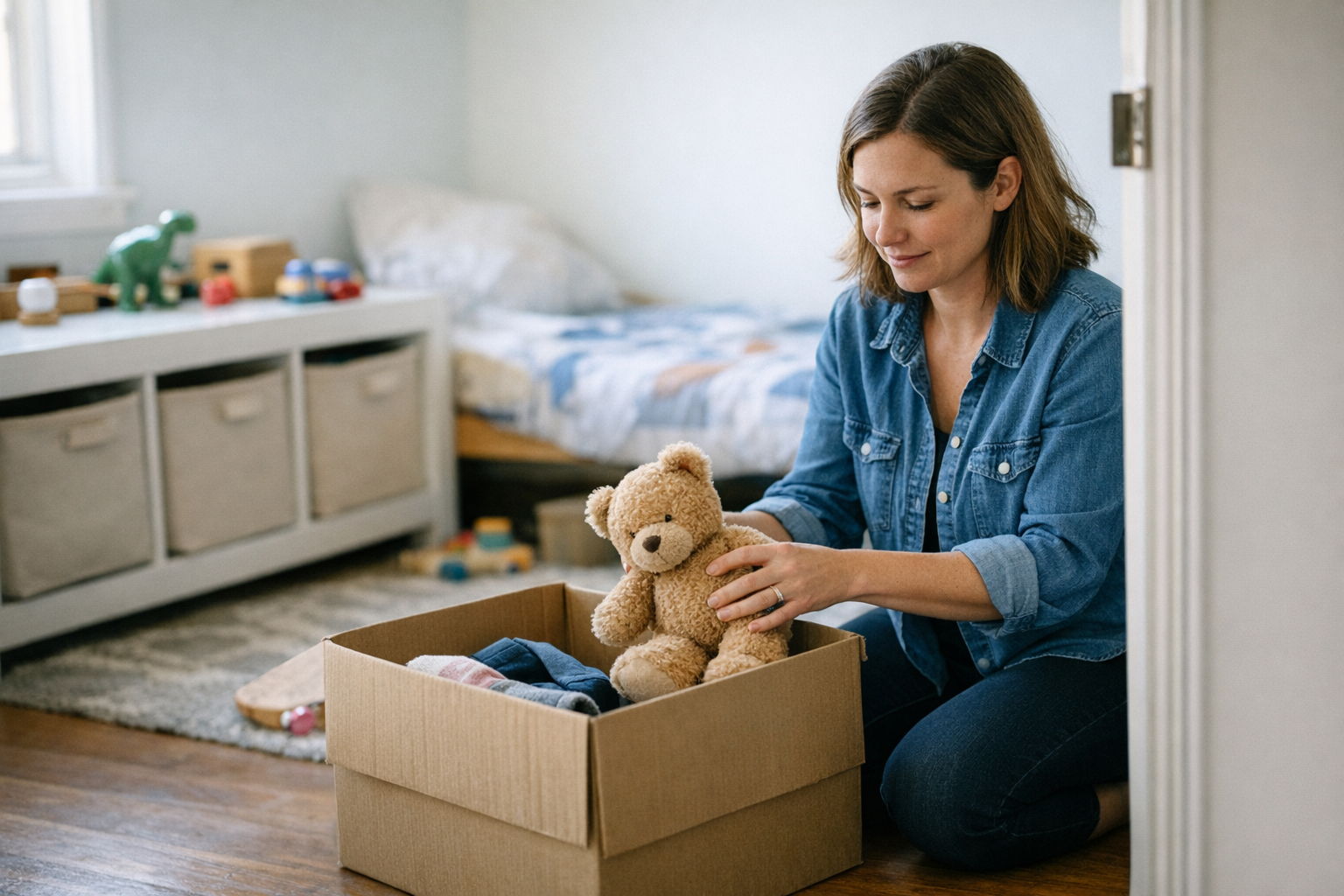
Making Room Before the Gifts Arrive: A Pre-Holiday Declutter for Kids’ Rooms
Picture a kid’s bedroom in the first week of January. New toys still in boxes on the floor, last year’s toys shoved under the bed, a closet that won’t close and a parent wondering where it’s all supposed to go. The gifts were lovely. The room just wasn’t ready for them.
A short declutter in November fixes most of that before it starts. Clearing out what your kids have outgrown makes space for what’s coming, gives them a calmer room through the busy weeks and teaches a useful habit along the way. It doesn’t need to be a weekend-long purge. A few focused sessions are usually enough.
Why November Is the Right Time
Decluttering a kid’s room right after the holidays is harder than it sounds. New things have just arrived, everyone’s attached to everything and there’s no clear sense of what will actually get played with.
November gives you a cleaner window. Kids are already thinking about wish lists, so it’s a natural moment to talk about what they don’t use anymore. You also have time to donate or pass things along before the end of the year, while the toys and clothes are still in season for someone else.
It lowers the pressure on the gift list, too. Once you see what’s already in the room, it’s easier to spot duplicates and skip gifts that would just add to the pile.
Bring the Kids Into the Process
A declutter goes much better when children are part of it rather than discovering later that a favorite toy disappeared. How involved they are depends on age.
Younger kids do best with short sessions and simple choices. Hold up two or three items and ask which one they want to keep. Keep it light, maybe with music and a snack.
School-age kids can sort their own shelves with a bit of guidance. Give them a few clear categories and let them make most of the calls.
Teens usually want control of their own space. Offer help, set a deadline and let them handle it their way, as long as the room ends up with some breathing room.
Explain the why in plain terms: you’re making space for new things and passing along toys that someone else might enjoy more. Kids tend to respond better to “making room” than to “getting rid of.”
A Simple Sorting System
Grab a few bags or boxes and label them. You don’t need an elaborate system. Four piles cover most of it:
- Keep: things that are used regularly or loved.
- Donate or pass along: good-condition items your child has outgrown.
- Recycle or toss: broken toys, dried-out markers, puzzles with missing pieces.
- Not sure: items your child isn’t ready to decide about.
The “not sure” box does a lot of the heavy lifting, because it lets kids say yes to letting go without feeling rushed. Put it in a closet or the garage for a few weeks. If nobody asks for anything in it, it’s usually safe to donate the whole box after the holidays.
Work Through the Room Zone by Zone
A whole bedroom at once is overwhelming for kids and adults alike. Break it into small areas and do one per session.
Start with the easy wins. Clothes that clearly don’t fit anymore are a quick, low-emotion place to begin. Do a try-on session for anything you’re unsure about.
Move to toys and games. Check for missing pieces, broken parts and things that haven’t been touched in months. Board games and puzzles are worth a quick inventory before game nights pick up for winter.
Tackle books and art supplies. Pass along books your child has outgrown, and test markers, glue sticks and crayons. A lot of art supply clutter is stuff that no longer works.
Finish with the hiding spots. Under the bed, the back of the closet and the bottom of the toy bin often hold the most forgotten items.
Pass Things Along Thoughtfully
Once you’ve sorted, get the donate pile out of the house quickly. Bags that sit by the door for weeks have a way of getting unpacked again.
Look for local options that fit: a younger cousin or neighbor, a school or daycare, a community group or a local donation center. Check what each one accepts before you drop things off, since policies vary. Some families let kids help choose where their toys go, which can make letting go feel more meaningful.
Electronics like old tablets or handheld games deserve a bit more care. Remove accounts and do a factory reset before passing a device along.
Set Up the Room for What Comes Next
With some space cleared, set the room up so it stays manageable after the holidays.
Give everything a home. Bins, shelves and labeled baskets make it easier for kids to put things away on their own. If a category doesn’t have a home, it ends up on the floor.
Agree on a simple rule. Many families use a version of the one in, one out rule for toys and gadgets: when something new comes in, something old goes out. It’s easier to start right after a declutter, when the room is already in good shape.
Plan a quick January check. A short follow-up after the holidays catches the new arrivals and keeps the room from sliding back. For broader ideas, WorldVillage’s guide to decluttering for calm family spaces covers the rest of the house.
Space for What Matters
A cleared-out room isn’t about having less for its own sake. It’s about making space for what a child actually loves, and making it easier for them to find it, play with it and put it away again.
When the gifts arrive this year, they’ll have somewhere to go. And your kids will have learned something valuable without a lecture: that letting go of what you’ve outgrown is part of making room for what comes next.