Packing a Winter Car Kit for Holiday Drives
The trunk is full of gifts, the kids are buckled in with snacks and headphones and the drive to Grandma’s is a few hours of highway. Then the weather turns, traffic stops for an accident ahead, or a tire goes flat on a cold, dark stretch of road. What felt like a simple trip becomes a long wait.
A winter car kit won’t prevent any of that, but it makes the wait safer and a lot more comfortable. Putting one together takes an afternoon and some things you probably already own, and it’ll ride along for every trip until spring.
Start With Keeping Warm
If your car stalls or you’re stuck in traffic for hours, staying warm is the first concern, especially with kids or older passengers.
Pack a warm blanket or two for the back seat. Wool or fleece holds up well, and an emergency space blanket takes up almost no room as a backup. Add a spare set of hats, gloves and warm socks, since those are the things that get left at home or soaked in the snow.
Hand warmers, the small air-activated packets sold near the checkout at many stores, are cheap and easy to tuck into a glove box. Kids tend to enjoy them too, which helps when everyone’s getting restless.
Light, Power and Communication
A flashlight with fresh batteries belongs in every car, along with spare batteries. A headlamp is even better, because it leaves your hands free if you need to look under the hood or change a tire.
A phone charger and power bank. Keep a car charger plugged in and a charged power bank in the kit, so you can still call for help if the car won’t run. Recharge the power bank every month or so.
Something to signal with. Reflective warning triangles or road flares help other drivers see you if you’re stopped on the shoulder. A bright cloth tied to the antenna or door handle signals that you need help.
Write down a few important phone numbers on paper as well, including your roadside assistance provider and a family contact, in case your phone dies.
Tools for Snow, Ice and Flat Tires
Your kit should match where you’re driving. A trip through snow country calls for more than a drive across a mild southern state, but a few basics are worth carrying anywhere winter weather is possible.
- An ice scraper and snow brush
- A small folding shovel
- A bag of sand or cat litter for traction if a wheel spins on ice
- Jumper cables or a portable jump starter
- A tire pressure gauge, and a check that your spare tire is inflated and the jack is where you think it is
Before the trip, take a moment to make sure you know how to use the jack and where the spare is stored. Doing it once in your driveway on a sunny afternoon is much easier than figuring it out at night on a highway shoulder.
Food, Water and Comfort for the Kids
Stuck-in-traffic hours feel a lot longer with hungry children. Keep a few bottles of water and some nonperishable snacks in the kit, like granola bars, crackers or trail mix, and rotate them so they don’t go stale. Plan for any allergies in the family.
A small bag of comfort items helps too. Wet wipes, tissues, a roll of paper towels and a few plastic bags handle spills and car sickness. A deck of cards, a coloring book or a couple of small toys that live in the car can buy some calm when the tablet battery runs out. Our guide to Thanksgiving road trips with kids has more ideas for keeping everyone happy on the road.
If anyone in the family takes daily medication, pack a day’s supply in the car for long trips, in case you’re delayed overnight.
A Basic First Aid Kit
A simple first aid kit covers the small stuff: bandages, gauze, antiseptic wipes, pain relievers suitable for adults and kids, tweezers and any personal items your family needs. Ready-made car kits are sold at drugstores and auto parts stores, or you can assemble your own in a small zippered bag.
Check it once a year and replace anything that’s expired or been used up.
Prepare the Car and the Plan
The kit is only half the job. Before a winter drive, check the weather and road conditions along your route, and give yourself time to leave early or delay if a storm is coming.
Keep the gas tank at least half full in winter. It gives you a cushion if you’re stuck in traffic with the heat running, and it helps keep moisture out of the fuel line. Make sure your wiper fluid is topped up with a winter blend, since slush and road salt use it up fast.
Tell someone where you’re going and when you expect to arrive, especially on rural routes. If you do get stranded, stay with your car unless help is clearly close by, since a car is easier for rescuers to find than a person on foot. Run the engine for about ten minutes each hour to stay warm, a common rule of thumb, and make sure the tailpipe is clear of snow to keep exhaust from building up inside.
Packing It All Up
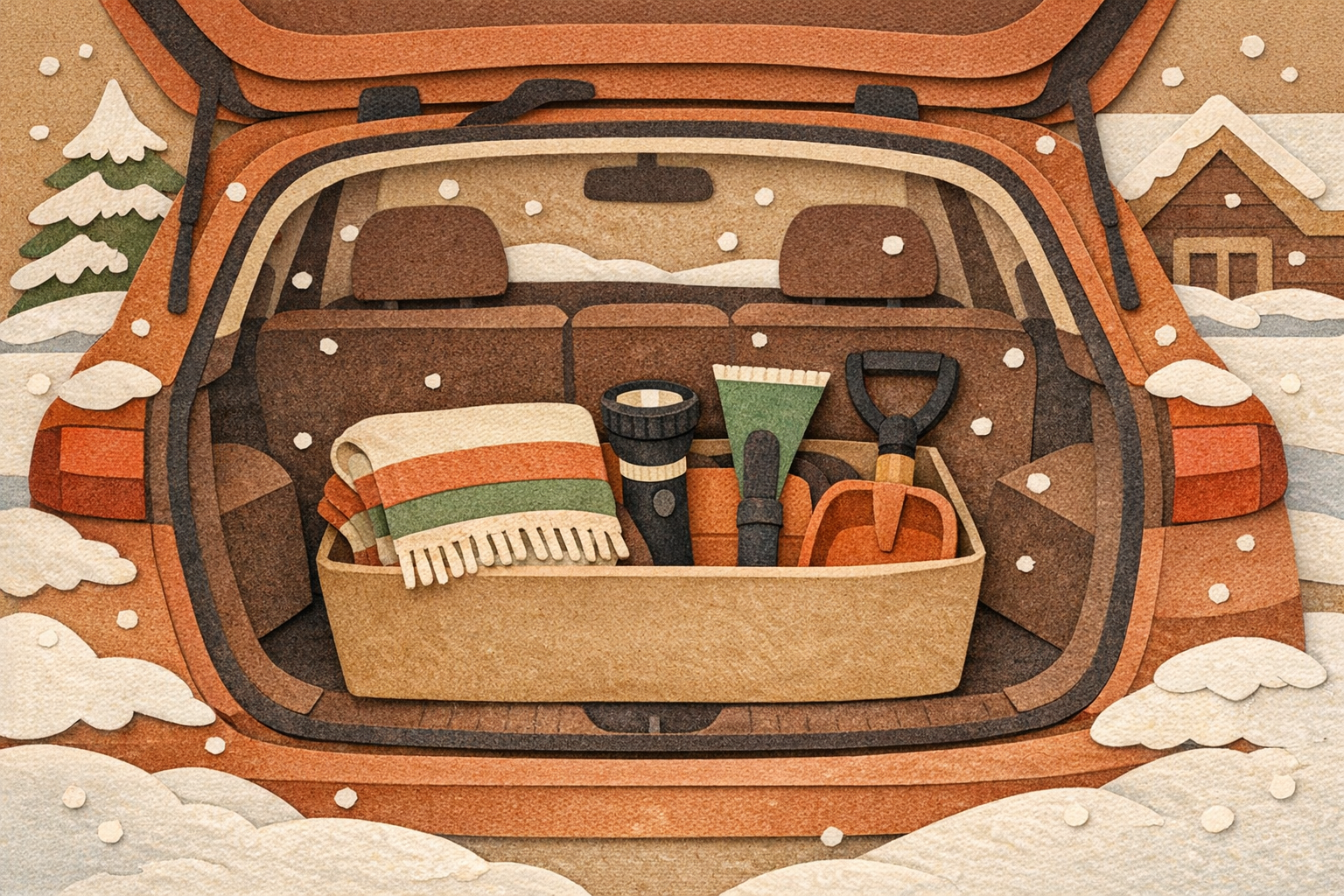
A plastic storage bin or a sturdy duffel bag keeps the kit together and easy to move between cars. Store it in the trunk where it won’t slide around, and keep the blankets and snacks somewhere you can reach from inside the car.
If you’re packing light for the visit itself, our guide to packing light for a holiday stay with relatives helps make room for the kit.
Peace of Mind on the Road
You’ll probably never need most of what’s in the bin. On the trip when the snow comes in early or traffic stops for an hour, you’ll have a warm blanket, a snack for the kids and a charged phone, and the drive stays an inconvenience instead of a crisis.
The best holiday drives are the ones you remember for where you were going.