
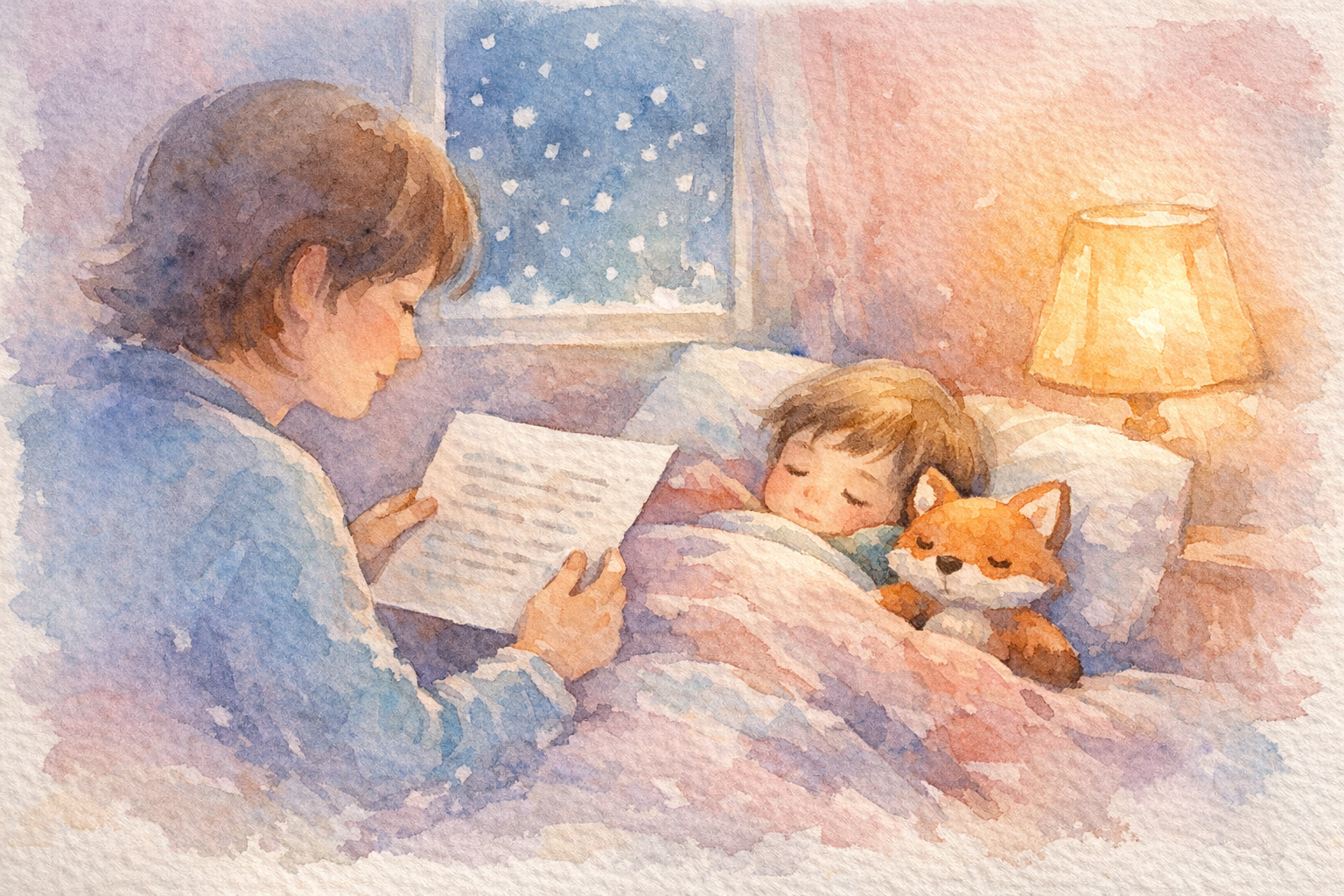
Creating Custom Bedtime Stories With AI for Long Winter Nights
By late fall, bedtime starts while it’s already dark outside. The evenings feel longer, the kids are restless and the stack of picture books has been read so many times that everyone can recite them. Somebody asks for “a new story,” and you’re running on the last bit of energy you’ve got.
An AI chat assistant can help here, not by replacing the bedtime routine but by giving you a fresh starting point. With a good prompt and a little editing, you can make short, personal stories that star your kids’ favorite things, fit the season and land at exactly the right length for lights out.
What AI Is Good For at Bedtime
AI tools are quick at producing a first draft. Give one a few details and it’ll return a story in seconds, with a beginning, a middle and a sleepy ending. That’s useful when you need something new and don’t have the time to write it yourself.
What AI doesn’t bring is your family’s inside jokes, the way your child’s eyes light up at a certain word or the sense of when a story’s getting too exciting for 8 p.m. That’s your part. Think of the AI as a brainstorming partner that hands you raw material, and you as the storyteller who shapes it.
If your family has already tried writing a silly family story together with AI, this is the calmer, shorter cousin of that project.
Building a Prompt That Works
The quality of the story depends heavily on what you ask for. A vague request gives you a vague story. A specific one gets you something that feels made for your kid.
Name the characters and the setting. A brave stuffed rabbit, a sleepy dragon who lives under the stairs or a snowplow that’s afraid of the dark. Kids love seeing their own toys and pets show up as heroes.
Set the length. Ask for a story that takes about five minutes to read aloud, or a specific number of short paragraphs. Without a limit, AI tools tend to run long.
Set the mood. Words like “gentle,” “cozy” and “calm ending” go a long way. Ask for no scary villains or cliffhangers if your child gets wound up easily.
Add a seasonal detail. First snow, a cold night with the heater humming, leaves blowing past the window or a holiday the family celebrates. Small touches make the story feel current.
A simple example prompt: “Write a calm bedtime story for a six-year-old about a stuffed fox named Pepper who helps a lost snowflake find its way home. Keep it short enough to read aloud in about five minutes, with a cozy ending where everyone goes to sleep.”
Keep Personal Details Out of the Prompt
Personalized doesn’t have to mean personal. You can make a story feel like it’s about your child without typing in their full name, school, address or anything else you wouldn’t post publicly.
Use a nickname, a first name only or a character stand-in. “A curious seven-year-old who loves trains” works just as well as real identifying details. It’s a good habit for any AI tool, and it’s an easy one to teach kids as they start using these tools themselves. WorldVillage’s guide to teaching kids to ask AI better questions touches on this kind of thoughtful use.
Read It Before You Read It Aloud
AI-written stories are usually fine, but not always. Sometimes a plot gets confusing, a detail doesn’t make sense or the tone wanders somewhere you didn’t expect. Skim the story once before bedtime.
Trim anything too long. If a paragraph drags, cut it. Shorter is almost always better for a tired child.
Swap in your family’s words. If your kids call the dog “Biscuit” instead of the name the AI gave it, change it. Small edits like this make a story feel like yours.
Fix the ending. The last lines matter most at bedtime. Make sure they wind down instead of setting up a new adventure that keeps a child wide awake asking what happens next.
Turn It Into a Family Ritual
Once a few stories land well, you can build them into a routine. Some families keep a running series with the same characters, so every night picks up where the last one left off. Others let a different child choose the hero each evening.
Let kids help write the prompt. Ask them who the story should be about and where it takes place. They’ll feel ownership, and you’ll hear some delightfully strange ideas.
Save the favorites. Copy the best stories into a notebook or a shared document. Over a winter, you’ll end up with a small collection that’s entirely your family’s.
Add pictures if you like. Some families pair stories with drawings by the kids, or with an AI-assisted picture book. There’s a separate guide on turning family photos into a simple AI-assisted storybook if you want to go that direction.
Keep the Screen Out of the Bedroom
A practical note: you don’t need a glowing tablet next to the bed for any of this. Generate and edit the story earlier in the evening, then read it from a printed page, a notebook or a phone with the brightness turned all the way down.
The point of a bedtime story is the closeness: your voice, the dim light and the slow end to the day. The technology is just backstage help. Keeping it out of sight keeps the moment about the two of you.
A New Story for Every Long Night
Winter nights can feel endless with small kids, and inventing something new every evening is a lot to ask of a tired parent. AI tools make it easier to show up with a fresh story, but the magic still comes from you reading it, changing the voices, pausing at the good parts and tucking someone in at the end.
Years from now, the details of those stories will blur. What tends to stay is the memory of being read to on a cold night, by someone who made the story just for them.


