Turning a Child’s Drawing Into a Picture Book With AI
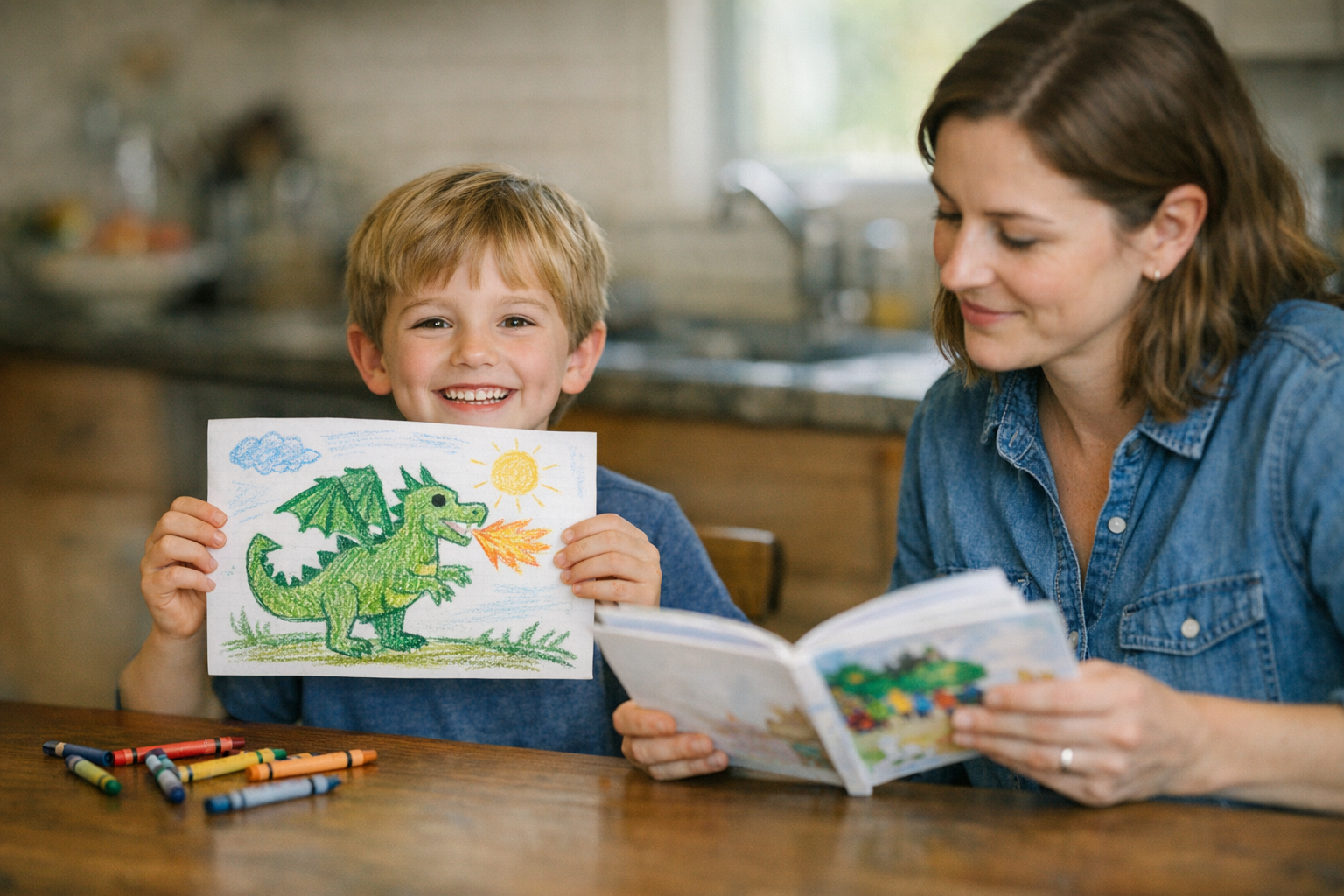
Every family with young kids has the stack. Crayon dragons, purple houses with smoke curling out of the chimney, a cat with six legs and a very proud expression. They go on the fridge for a week, then into a folder, then into a box in the closet. The stories the kids told while drawing them tend to vanish faster than the paper does.
AI tools give you a fun way to pull those drawings back out and turn them into something new: a short picture book starring your child’s own characters, with a story you build together. Your kid stays the artist and the author. The AI helps with the parts that would otherwise take you all weekend.
Start With the Drawing and the Story Behind It
Pick one drawing your child is excited about. A character works best, whether it’s a monster, an animal, a superhero or a version of the family dog.
Then ask questions and write down the answers. What’s this character’s name? Where does it live? What does it love, and what is it scared of? What happened to it today? Kids often have a whole world in mind that never made it onto the paper.
Those answers are the heart of the book. Write them down in your child’s own words, even when the grammar wanders. You’ll use them as the raw material for everything that follows.
Use AI to Shape the Story, Not Write It
A chat assistant like ChatGPT, Gemini or Claude can help turn a pile of ideas into a simple story with a beginning, middle and end. The key is to give it your child’s material and ask it to organize, not invent from scratch.
A prompt might look like this: “My six-year-old drew a character named Pickles, a green dragon who lives under the kitchen sink and is afraid of the vacuum cleaner. Help us turn this into a ten-page picture book story with one or two short sentences per page. Keep her ideas and her words where you can.”
Read the draft together and edit it. Kids are usually quick to say what’s wrong. “Pickles wouldn’t do that.” “That’s not funny enough.” Let them change it. Ask the AI for alternatives on a page they don’t like, or for a few possible endings to choose from. The back-and-forth is where a lot of the fun happens, and it’s a good lesson in revising. Our guide to teaching kids to ask AI better questions has tips for helping them do the prompting themselves.
Illustrations: Keep Your Child’s Art at the Center
There are two good approaches to the pictures, and you can mix them.
Let your child draw every page. Once the story is set, print the text or write each page’s sentence at the top of a blank sheet, then let your kid illustrate. This keeps the book entirely theirs, and having a story to follow often makes kids more ambitious with their drawings.
Use AI image tools to build on the original drawing. Some image generators let you upload a picture and ask for new versions of it. You could ask for “this same green dragon, drawn in the same crayon style, hiding behind a laundry basket.” Results vary a lot, and the AI won’t always keep the character consistent from page to page. Treat it as an experiment and let your child decide which images make the cut.
A mix tends to work well: your child’s original drawing on the cover, their own art for the key scenes, and an AI-assisted picture or two where they want to see their character somewhere they can’t quite draw.
Before uploading any photo or drawing, check the tool’s privacy settings and terms, and keep photos of your child’s face out of it. A drawing of a dragon is fine to share. A picture of your kid holding it is something to think twice about.
Put the Book Together
Once you have text and pictures, assembly is the easy part.
A simple slideshow or document app works fine. Put one picture and one or two sentences on each page, choose a large, friendly font and add a title page with your child’s name as author and illustrator. Many free design tools have picture book or storybook templates if you’d like something fancier.
To make it a real book you can hold, several photo book services will print a short softcover or hardcover book from your file. Prices and options vary, so compare a few before ordering. A home printer and a stapler work too, and a kid won’t love it any less.
Make It a Series
Once one book exists, kids usually want another. Pickles might go on vacation, meet a new friend or finally face the vacuum cleaner. Keep the original character notes handy so each new story stays consistent.
This also makes a good winter project. Long evenings and school breaks leave plenty of time for a page or two a night, much like creating custom bedtime stories with AI. Older siblings can help younger ones, or take on their own book with a more complicated plot.
Finished books make thoughtful gifts too. Grandparents in particular tend to treasure a story written and illustrated by a grandchild. If you enjoy this kind of project, our guide to building a homemade family board game with AI uses the same idea of letting kids lead while the tool helps.
What the Book Keeps
Children’s drawings capture a particular age in a way photos don’t. The way they draw a sun or a person changes from one year to the next, and the stories they tell about those drawings change even faster.
A small book built from one of them holds onto both, the picture and the story your child told you about it. Years from now, that’s the part you’ll be glad you wrote down.