How the Family Computer Moved Out of the Den
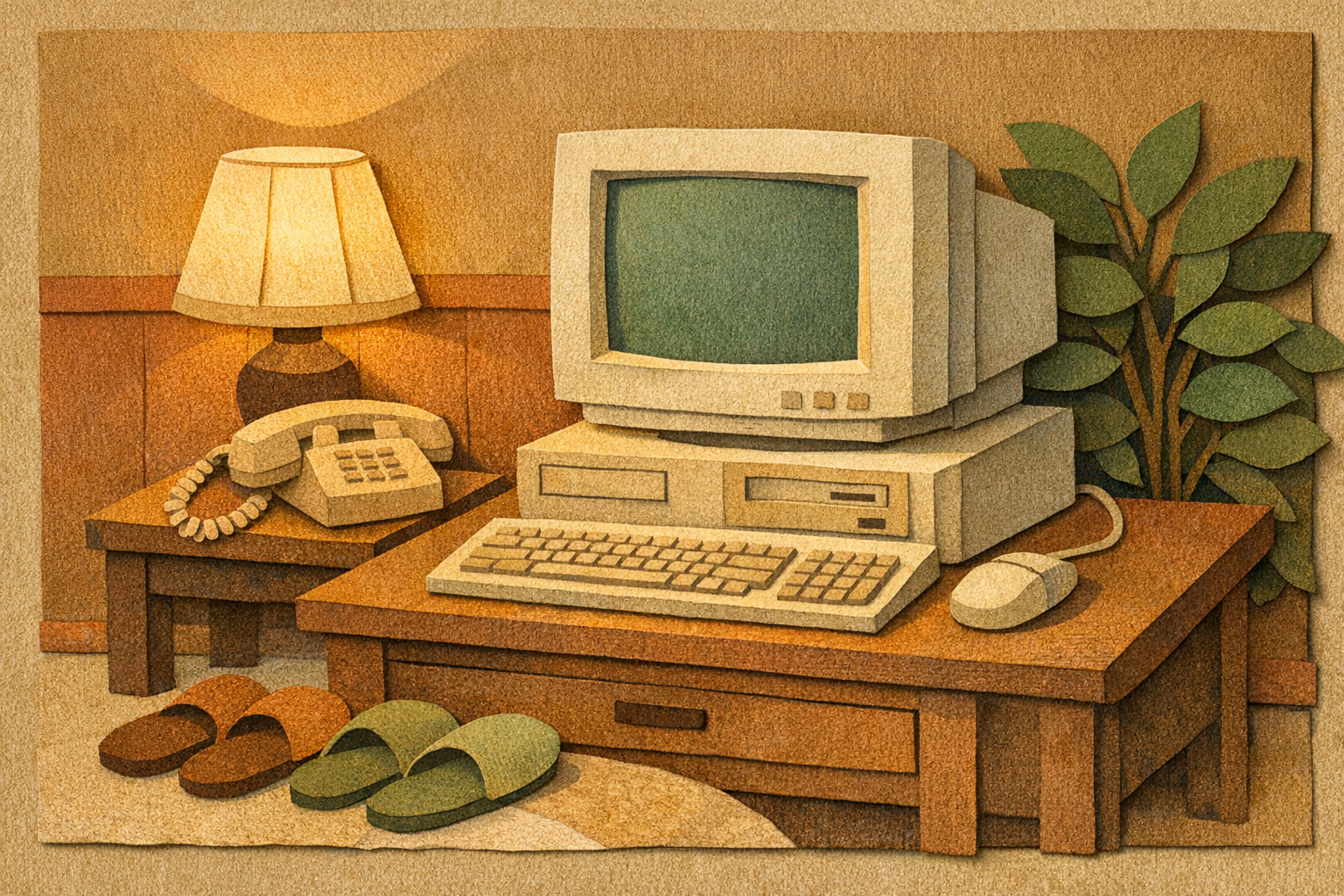
For a long stretch of internet history, going online meant going to a specific spot in the house. There was a desk, usually in the den, the spare bedroom or a corner of the kitchen. On it sat a beige tower, a heavy monitor that took up half the desk and a keyboard that the whole family shared, crumbs and all.
That one machine was the family’s door to the web. Whoever sat in the chair got to use it, and everybody else waited. Today the internet is in every pocket, on the kitchen counter and in the car. The trip from that single desk to the house we live in now is a good way to understand how families got to where they are with technology.
One Machine, One Chair, One Long Line
The early family computer was a shared appliance, closer to the TV than to a phone. It lived in a common room partly because it was big and partly because it was expensive enough that nobody was going to buy a second one.
That setup created its own household rules. Kids negotiated for time after homework. Parents wanted it for email or the checkbook program. Somebody always needed it “for just five minutes” that turned into forty.
It also meant everyone could see the screen. Parents didn’t need a settings menu to know what the kids were doing online, because the kids were doing it ten feet from the stove. Nobody called it a parental control. It was just the layout of the house.
The shared login was normal. Plenty of families had one email address, one desktop and one set of bookmarks. Privacy inside the household wasn’t really a concept yet, because the machine itself was a family possession.
The Phone Line Problem
If you were online in the dial-up years, you remember the sound. The modem screeched and hissed while it connected, and then the house’s phone line was spoken for. WorldVillage has a whole piece on what dial-up internet sounded like and why it mattered, and it’s worth a read if that noise is stuck in your head.
That shared line shaped family life more than people tend to remember. A teenager in a chat room meant Grandma’s call couldn’t get through. A parent waiting on an important call had to kick everyone offline. Some households added a second phone line just for the computer, which felt like a big upgrade at the time.
Being online was a session with a start and an end. You logged on, did what you came to do and logged off, partly because the line was needed and partly because many plans charged by the hour. The internet was a place you visited.
Browsers Turned the Desk Into a Window
The machine stayed put for a while, but what happened on the screen changed fast. Once graphical web browsers caught on, the family computer stopped being mostly a tool for typing and games and became a window onto pages, pictures and eventually video. There’s a good history of how the first web browsers changed the way families used computers if you want the longer version.
This was also the era of the install CD showing up in the mail and in cereal boxes, store displays and magazine inserts. Getting online became something a regular household could do without a computer science background. That’s when the desk in the den went from a hobby corner to a household hub.
The desk itself still mattered, though. Homework, comparing prices before a big purchase, email to relatives across the country and the first family photo uploads all happened in the same chair.
Laptops and Wi-Fi Cut the Cord
Two changes did most of the work of moving the computer out of the den. Laptops became affordable enough for regular families, and home Wi-Fi meant the connection no longer depended on where the phone jack was.
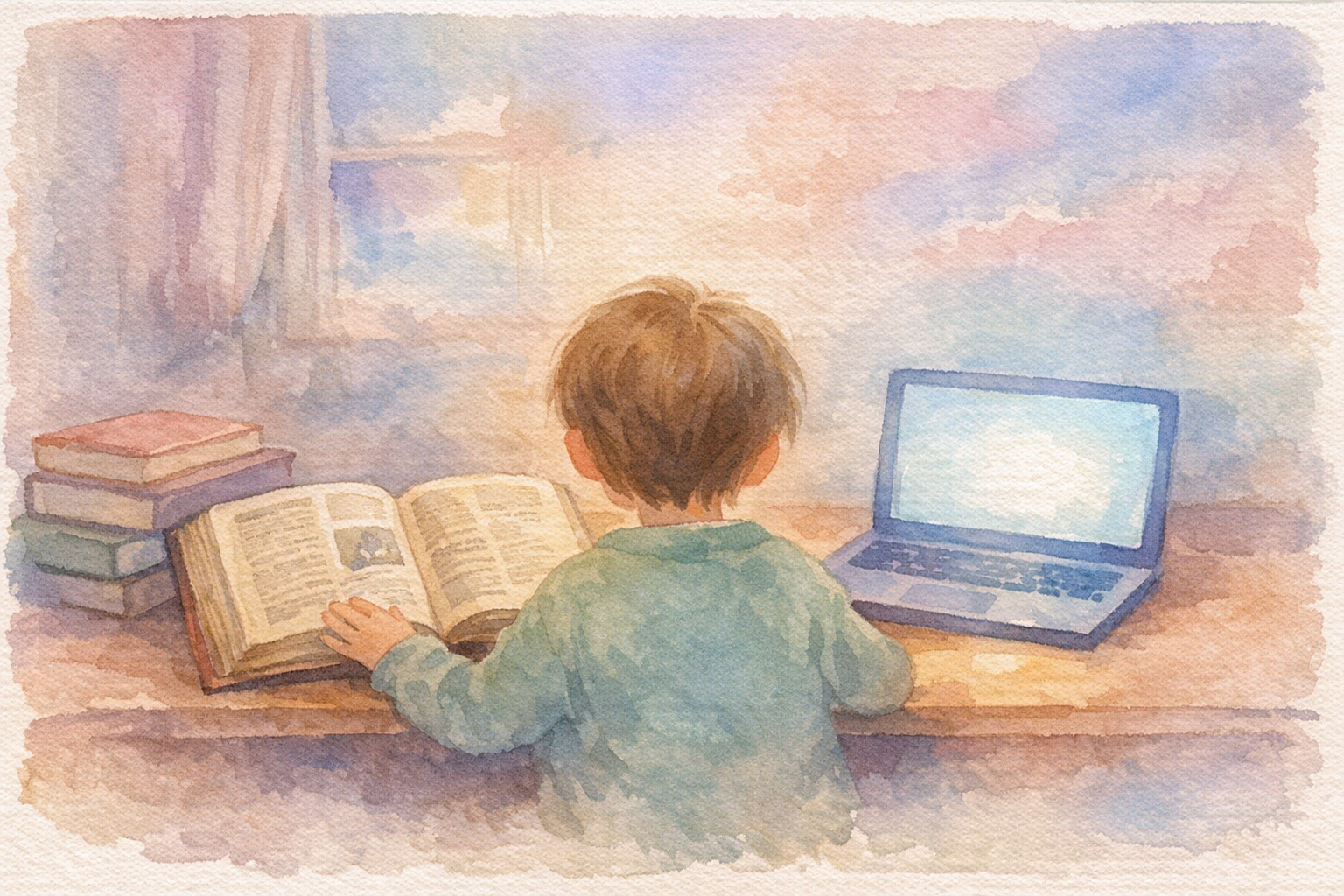
Put those together and the computer could go anywhere. It moved to the couch, the kitchen table and, eventually, the bedroom. Broadband connections that stayed on all the time meant there was no more dialing in and no more tying up the phone. You didn’t “go online” anymore. You just were online, whenever the lid was open.
This is where household habits started to drift apart. When the screen was in the den, everyone’s internet use was a little bit public. When it moved to a lap behind a closed door, it became private. Families got flexibility and lost a lot of the casual visibility they’d had without trying.
Then the Computer Went Into Everyone’s Pocket
Smartphones finished the job. The family computer didn’t just leave the den; it split into a separate device for nearly every person in the house. Tablets joined in for the younger kids, and smart speakers and streaming boxes put more connected gadgets into the living room.
The shared desk is mostly gone, and with it the built-in rules that came from sharing one machine. Nobody waits in line for a screen. Nobody hears the modem. Each person carries their own internet around all day.
That’s convenient, and in plenty of ways it’s better. Families stay in touch across distances that used to mean a phone call once a week. Kids can look up anything. But many of the habits that happened by accident in the den now have to be chosen on purpose.
What the Old Den Setup Still Teaches
You don’t need to haul a desktop back into a common room to borrow the good parts of that era. A few of its accidental habits are easy to bring back.
Keep a shared screen space. Some families still keep the main family device, or the charging spot, in a common area. It’s the same idea as the den: screens are more social when they live where people gather.
Make being online a session again. The dial-up limit forced people to log on with a purpose. A family can do the same by choice, for example with device-free dinners or a set evening cutoff.
Talk about what’s on the screen. When everyone could see the monitor, conversations about what people found online happened naturally. Now they take a little more effort, and they’re still worth having.
For more on that last point, WorldVillage’s guide to why fewer notifications make for calmer family dinners has practical ideas.
A Room That Used to Hold the Whole Internet
It’s a little funny to think the entire family internet once fit on one desk in one room, with one chair and a phone line everybody fought over. It was slower and clunkier, and nobody would trade back.
Still, the den computer taught families something without meaning to. Technology fits into a home’s routines in whatever way the home is arranged. The machine moved out of the den because it could. Where screens live in your house now, and how people use them, is still a choice the family gets to make.