How the E-Card Rose, Faded and Found a New Life
There was a moment, not so long ago, when an email announcing “You’ve received a greeting card!” felt like a real treat. You clicked the link, waited for the page to load, and watched a little animated bear wave at you while a tinny song played through the computer speakers.
The e-card was one of the first ways regular families used the internet to say something warm to each other. Its story follows the web itself: a burst of novelty, a slow fade as new tools came along, and a low-key comeback in forms most people don’t even call e-cards anymore.
A Card That Arrived Instantly
As email spread into homes in the late 1990s, people started looking for things to do with it beyond forwarding jokes. Sending a greeting card online was a natural fit. It was free or close to it, it arrived the same day, and you didn’t need a stamp or a trip to the store.
Early e-cards were simple. A picture, a short message and maybe a line of colorful text. Many worked by sending the recipient a link rather than the card itself, partly because early email couldn’t reliably show images. You’d click through to a website to “pick up” your card.
That small ritual made the whole thing feel like an event. For families spread across states or countries, it was also a reminder that the computer in the den could be used for more than homework and spreadsheets. It was a way to remember a birthday without the worry of a card getting lost in the mail.
The Animated Era
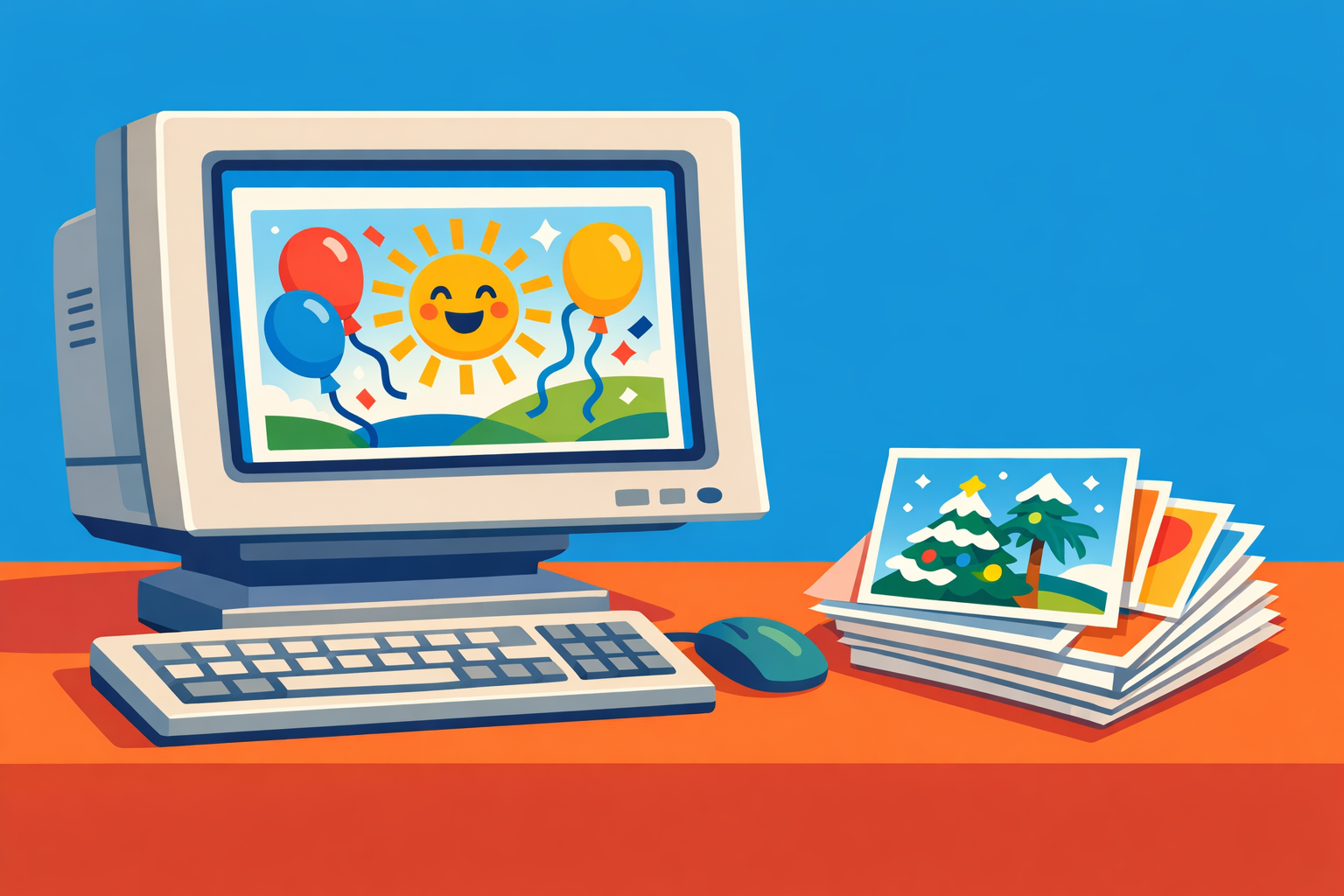
As home internet got faster, e-cards got fancier. Animation tools made it possible to build little cartoons that played in the browser, complete with music and sound effects. Dancing characters, singing animals and fireworks became the standard.
Card sites grew big libraries organized by holiday and occasion. You could find a card for nearly anything: graduations, get-well wishes, office birthdays and holidays most people had never heard of. Some sites were free and supported by ads; others offered paid memberships with more designs.
For a lot of people, especially grandparents who were new to computers, sending e-cards was one of the first things they learned to do online. It was a friendly, low-stakes way to practice clicking links, typing messages and sending email.
Why the Fade Set In
E-cards didn’t disappear overnight. They just got crowded out.
Social media changed birthdays. Once friends and family were connected on social networks, a birthday reminder showed up automatically. Posting a quick message on someone’s page became the easy default, and it was public, so everyone could join in.
Phones took over. Texting and messaging apps made it simple to send a photo, a GIF or a short video in seconds. A cartoon card that needed a computer and a browser started to feel slow by comparison.
The animation tools aged out. Many of the old animated cards relied on browser plug-ins that faded away as phones and modern browsers dropped support. A lot of that classic content simply stopped working.
Spam made people wary. “You’ve received a card” became a common trick in scam emails, used to get people to click a bad link. That made many families hesitant to open real ones, which took some of the fun out of it.
The Comeback Nobody Named
The interesting part is that the idea behind the e-card never really went away. It just changed shape.
Digital invitations for parties, weddings and showers are a direct descendant. They look polished, collect RSVPs and often arrive with a little animation, much like the cards of old.
Group cards have become popular, especially for coworkers, teachers and anyone moving away. Instead of passing a paper card around an office, people add messages, photos and even short videos to one shared online card.
Video greetings let a whole family record clips that get stitched together into one message for a milestone birthday or anniversary. They’re e-cards with real faces instead of cartoon bears.
AI-made cards are the newest twist. Families now use AI tools to design custom artwork or help with a verse, then print it or send it digitally. Our guide to making personalized holiday cards with AI and your own photos walks through how to keep them personal.
Paper Never Lost Its Place
Through all of this, paper cards held on. In some ways, the rise of digital greetings made a physical card feel more special. A handwritten note in the mailbox stands out precisely because it took more effort.
Many families now mix the two. An e-card or text for the quick hello, and a paper card for the moments that deserve something you can keep on the fridge. It’s similar to how the holiday catalog gave way to online shopping without the excitement of browsing ever going away, a story we told in From the Wish Book to the Online Wish List.
A Safe Way to Enjoy Them Today
If you send or receive digital cards this season, a little caution goes a long way:
- Open cards only from people you know and were expecting to hear from
- If a card email looks odd, ask the sender by text or phone before clicking
- Be wary of any “card” that asks you to download a file or sign in to see it
Real greeting services rarely need anything more than a click to show you the card.
Small Gestures, Same Feeling
The e-card’s story is really about people finding new ways to say “I’m thinking of you.” The technology went from waving cartoon bears to shared video montages, but the feeling on the receiving end hasn’t changed much.
Someone remembered. Someone took a minute. Whether it shows up in an inbox, a group chat or the mailbox, that’s still the part that counts.