How Online Grocery Shopping Changed the Thanksgiving Store Run
For a long time, the Thanksgiving grocery run was a family ritual whether you wanted it or not. Someone drove to the supermarket a few days before the holiday, circled the parking lot, wrestled a cart with one wobbly wheel and hunted for the last can of pumpkin while half the town did the same thing. It was crowded and exhausting, and for many families it was simply part of the season.
That trip still happens in plenty of households. But for a growing number of families, the turkey now arrives in the trunk via curbside pickup or shows up at the door in a stack of bags. How we got from one to the other is a story about the internet slowly working its way into one of the most ordinary chores there is.
The Store Run Before the Screen
Before online ordering, grocery shopping was entirely physical. You made a list on paper, maybe clipped coupons from the Sunday newspaper, and walked the aisles yourself. If the store ran out of something, you found out when you got there.
Holiday shopping magnified all of it. Stores stocked up for the rush, and families planned their trips around work schedules and store hours. Some people swore by going early in the morning. Others waited until late at night. Everyone had a strategy, and none of them avoided the crowds entirely.
There was a social side to it, too. You’d run into neighbors, compare notes on stuffing recipes in the checkout line and come home with at least one thing that wasn’t on the list.
Early Experiments That Came Too Soon
As the web spread into homes in the dial-up years, some companies imagined people ordering groceries from their computers. The idea made sense on paper. In practice, it ran into real problems.
Connections were slow, and websites were clunky. Many households weren’t comfortable entering a credit card number online yet. And groceries are hard to deliver well. Milk has to stay cold, bread can’t be crushed, and a family dinner depends on everything showing up at once.
Several of the early grocery delivery efforts during the dot-com boom struggled or shut down. The concept held up. The technology, the logistics and shopping habits needed more time to catch up. If you want the wider context for that era, the internet’s evolution from dial-up scarcity to always-on culture covers how much changed in how families got online.
What Had to Change First
Online grocery shopping needed a few things to fall into place before it could work for an ordinary Thanksgiving.
Faster, always-on internet. Broadband made browsing hundreds of products practical. Nobody wants to wait for a page to load to see the price of celery.
Trust in paying online. As families got used to shopping on the web for books, clothes and gifts, ordering food stopped feeling risky.
Phones in every pocket. Smartphones turned the shopping list into something you could build on the couch, in a waiting room or standing in front of the pantry.
Stores investing in the back end. Grocery chains had to figure out how to pick orders, keep cold items cold and hand bags to customers in a way that didn’t slow down the rest of the store.
Curbside Pickup and the Delivery Window
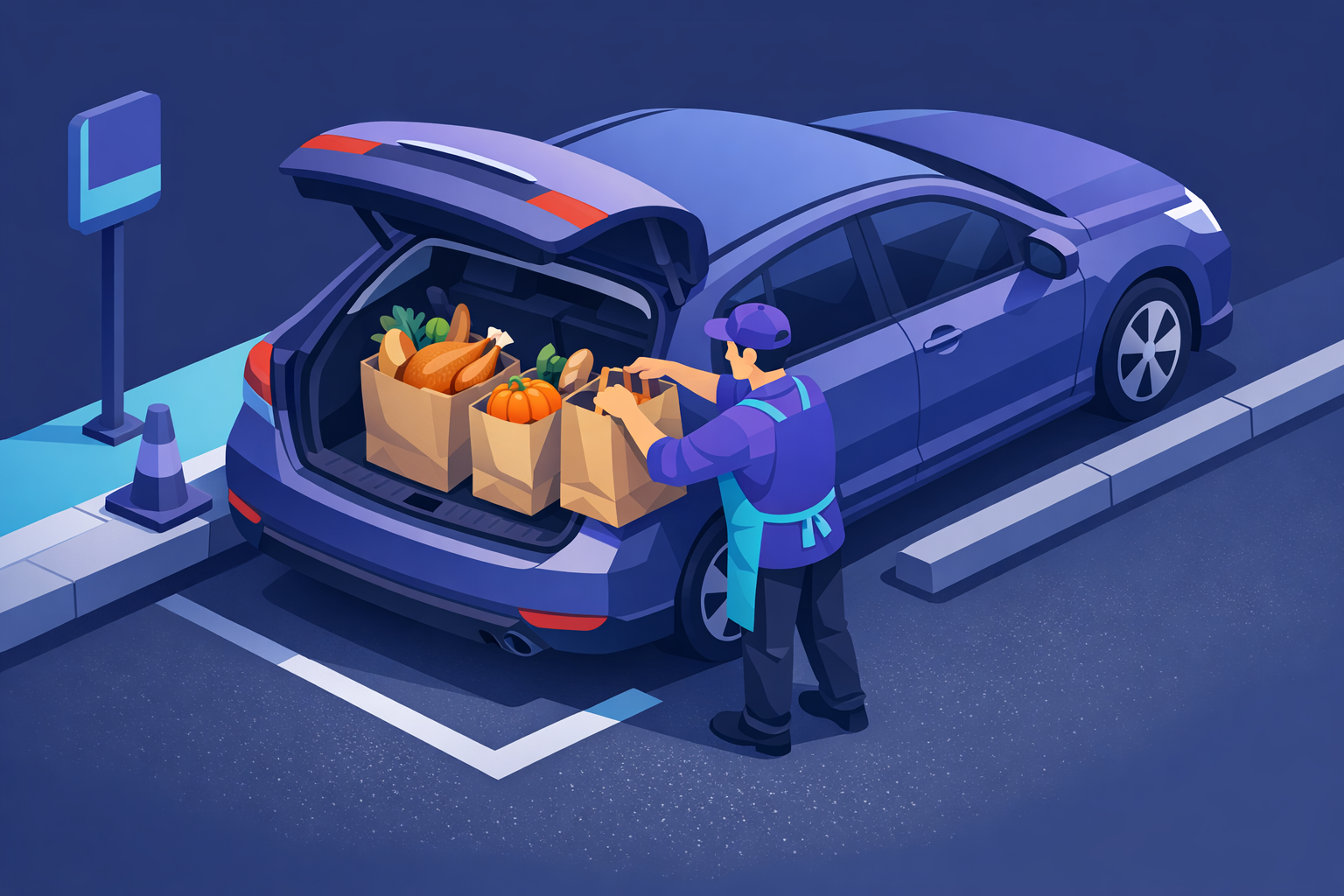
Once those pieces came together, two models took hold. Some families started ordering for delivery, choosing a time window and having groceries brought to the door. Others preferred curbside pickup, where a store employee loads the bags into your trunk.
Both changed the holiday run in different ways. Delivery meant you might not leave the house at all. Pickup kept the drive but skipped the aisles, which appealed to parents with small kids in car seats.
The holiday rush shows up online, too. Popular pickup and delivery windows around Thanksgiving tend to fill up, so the old strategy of “go early” turned into “book early.” The crowd moved from the parking lot to the reservation screen.
Substitutions and Other New Headaches
Online shopping solved some problems and introduced new ones. Anyone who’s ordered groceries online knows the experience of opening a bag and finding a substitute they didn’t expect.
On an ordinary week, a different brand of pasta is no big deal. On Thanksgiving, a substitution can matter a lot. The wrong kind of flour or a smaller turkey can throw off a recipe that’s been in the family for decades.
Learn the substitution settings. Check whether your grocery app lets you approve or block substitutions for specific items. If it does, decide item by item for holiday staples.
Order the critical items early. If you need a specific brand of stuffing mix or canned cranberry sauce, getting it in an earlier order gives you time to find it elsewhere if it doesn’t come.
Inspect the bags right away. Check for missing or damaged items while there’s still time to fix the problem.
What We Gained and What We Lost
For many families, online grocery shopping gave back time and energy during a stressful week. Parents with jobs, people caring for older relatives and anyone without easy transportation got a new option. Comparing prices became easier, and so did sticking to a list.
Something was lost, too. The chance encounters in the aisle, the impulse buy that became a new tradition and the feeling of choosing your own produce are harder to come by when someone else does the picking.
Online reviews and ratings play a role here as well. The way families read reviews before buying, explored in how online reviews changed the way families shop, carried over into groceries, with ratings on everything from frozen pies to roasting pans.
The Thanksgiving Run Today
Today, families mix and match. Some order the heavy staples online and still go to the store for fresh produce and the turkey. Others do everything through an app and spend the time they saved cooking. Plenty still prefer the full in-person trip, crowds and all, because it feels like the start of the holiday.
The planning has changed more than the meal. Shopping lists live on phones, menus get built with digital tools, and some families even use AI to plan a Thanksgiving menu before a single item lands in the cart.
A Familiar Chore in a New Form
The Thanksgiving grocery run has always been about getting everyone fed. The internet didn’t change that goal. It changed how families get there, from coupons and parking lots to apps and pickup windows.
Whatever your household chooses, the tradition lives on in the planning itself. Someone still decides how many potatoes to buy, someone still forgets the whipped cream and someone still makes a last-minute trip for it. Some parts of the holiday stay the same no matter how the groceries arrive.