Keeping Bedtime Steady Through the Late Nights of the Holiday Season
It’s 11:40 on a Saturday night. The party wrapped up an hour ago, the dishes are stacked, and you’re scrolling on the couch because your brain hasn’t gotten the memo that the evening is over. Tomorrow there’s a brunch. Next weekend there’s a recital, a work dinner and a cousin’s visit.
None of these nights is a problem on its own. Strung together across six weeks, they can leave you running on fumes right when you want the energy to enjoy the season. The goal isn’t to skip the fun. It’s to keep your sleep from getting knocked so far off course that January has to clean up the mess.
Pick an Anchor That Doesn’t Move
Most sleep advice says to keep the same bedtime every night. During the holidays that’s wishful thinking. A more realistic anchor is your wake-up time.
If you usually get up at 6:30, try to keep it within about an hour of that, even after a late night. You’ll feel a little short the next day, but your body clock stays roughly where it was. Sleeping until 10 feels great in the moment and then makes the following night harder, because you won’t be tired at your normal bedtime.
A short nap in the early afternoon can cover the difference. Keep it brief so it doesn’t eat into the next night.
Build a Landing Strip, Not a Cliff
Coming home from an evening out and dropping straight into bed rarely works. You’re still wound up from conversation, music and bright rooms. Give yourself a short landing strip instead.
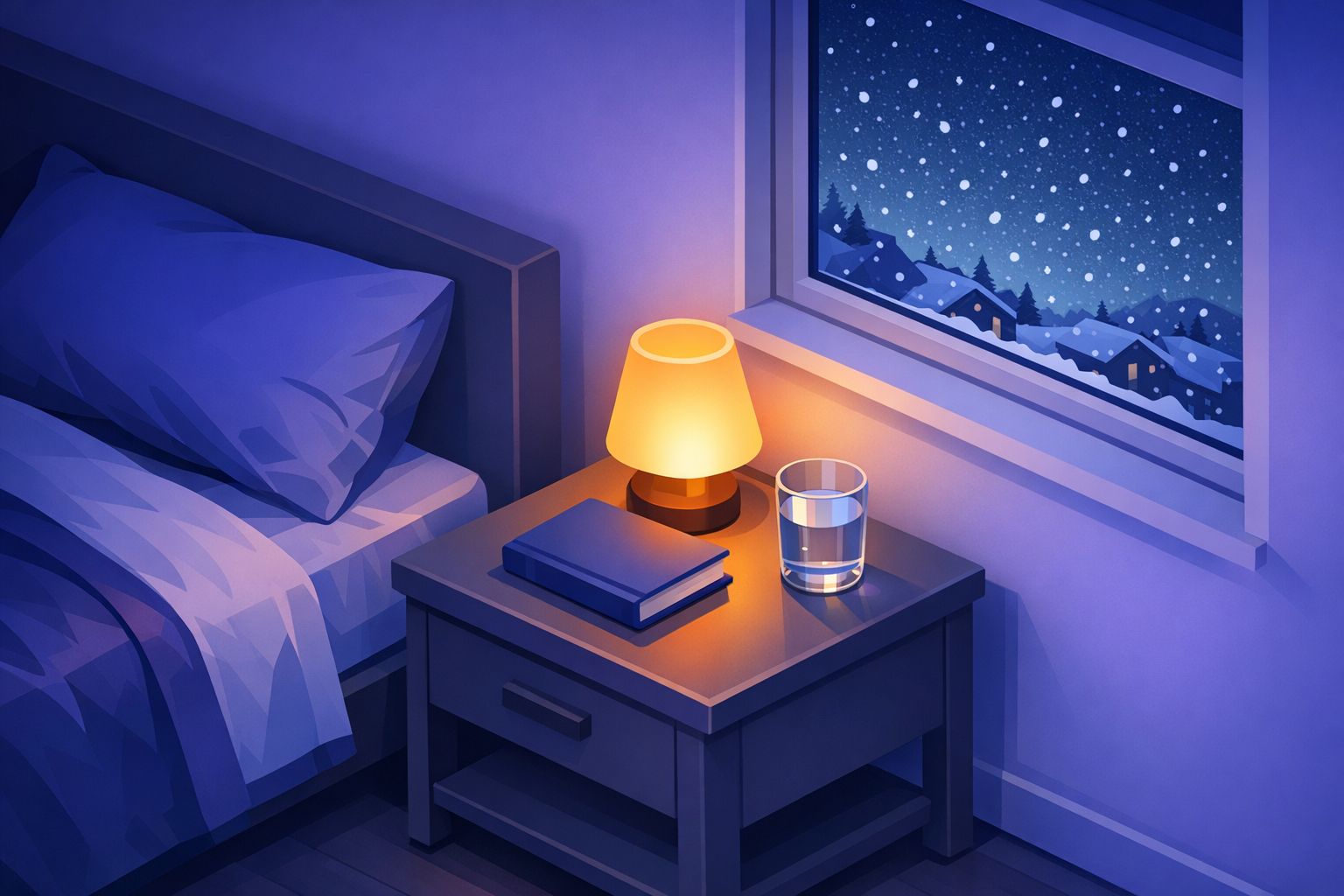
Dim things down first. Switch off the big overhead lights when you walk in and use a lamp. Lower light is a cue your body understands.
Do one small, boring task. Set out tomorrow’s clothes, start the dishwasher, fill a water glass. Something with your hands, not your phone.
Leave the phone in another room. This is the hard one. Scrolling through photos from the party is tempting, and it’s also the easiest way to turn a 20-minute wind-down into an hour. If your phone is your alarm, a cheap alarm clock solves that in one purchase. We’ve written before about one family charging spot outside the bedrooms, and the holidays are a good time to try it.
Go Easy on the Usual Suspects
You already know the list. Late coffee, a heavy dinner right before bed and an extra drink or two all make sleep lighter and choppier, even when they seem to help you drift off.
You don’t have to give anything up. A few small swaps go a long way:
- Switch to decaf or herbal tea after mid-afternoon on party days.
- Alternate drinks with a glass of water, and stop a couple of hours before you plan to sleep.
- If dinner is late, keep the second helping for tomorrow’s lunch.
None of that is dramatic. It just takes the edge off the nights that would otherwise leave you groggy.
Protect a Few Quiet Evenings on Purpose
When the calendar fills up, empty evenings disappear first. Nobody schedules “nothing,” so nothing is what gets squeezed out.
Look at the next month and mark a couple of evenings each week as home nights. Treat them like any other commitment. On those nights, aim for your normal bedtime or a little earlier, so you’re banking some rest before the next busy stretch. Our piece on protecting your quiet time when the holiday calendar fills up goes further on how to say no without guilt.
If you share the calendar with a partner or older kids, put those home nights on the shared calendar. It’s much easier to turn down an invitation when the evening is already visibly spoken for.
Help the Kids Stay on Track Too
Children feel late nights more than adults do, and a tired kid at a family gathering is nobody’s favorite guest. You can’t control every event, but you can control the shape of the day around it.
On a late-night day, keep the morning and afternoon calm. A quiet hour after lunch helps. When you get home, skip the full bedtime routine if it’s very late and go to the short version: pajamas, teeth, one song or a few pages of a book, lights out.
The next morning, nudge them back toward their normal wake-up time rather than letting them sleep until noon. Same principle as for adults. The Thanksgiving road trip planning we covered earlier applies here as well; a long drive timed around nap or sleep hours can do a lot of the work for you.
When You Can’t Fall Asleep
Some nights the mind just won’t settle. Maybe it’s the leftover buzz of a good evening, or maybe it’s the list of things you still need to buy.
If you’ve been lying awake for a while, get up. Go to another dim room and do something low-key until you feel sleepy, then try again. Lying in bed getting frustrated tends to teach your brain that bed is a place for worrying.
For the to-do list, keep a notepad by the bed. Writing the worry down, even as three scribbled words, makes it easier to let go of until morning. It’s a small trick, and it works more often than you’d expect.
If poor sleep sticks around after the holidays are over, or you’re snoring heavily, waking up gasping or exhausted no matter how long you sleep, that’s worth a conversation with your doctor. Seasonal late nights explain a lot, but not everything.
Plan the Landing in January
The weeks right after the holidays are when a lot of people feel the accumulated tiredness. You can plan for that now.
Leave the first weekend of January as open as you can. Put back your normal bedtime a few days before the kids return to school or you head back to work, rather than the night before. Getting back on schedule goes better as a slope than as a cliff.
Rest isn’t the reward you get after the season is over. It’s what lets you show up for the parts you’ll actually remember: the long dinner, the late conversation, the morning with coffee and nowhere to be. Guard a little of it, and the rest of the season tends to feel lighter.