Staying Active Indoors When Fall Weather Turns Gray
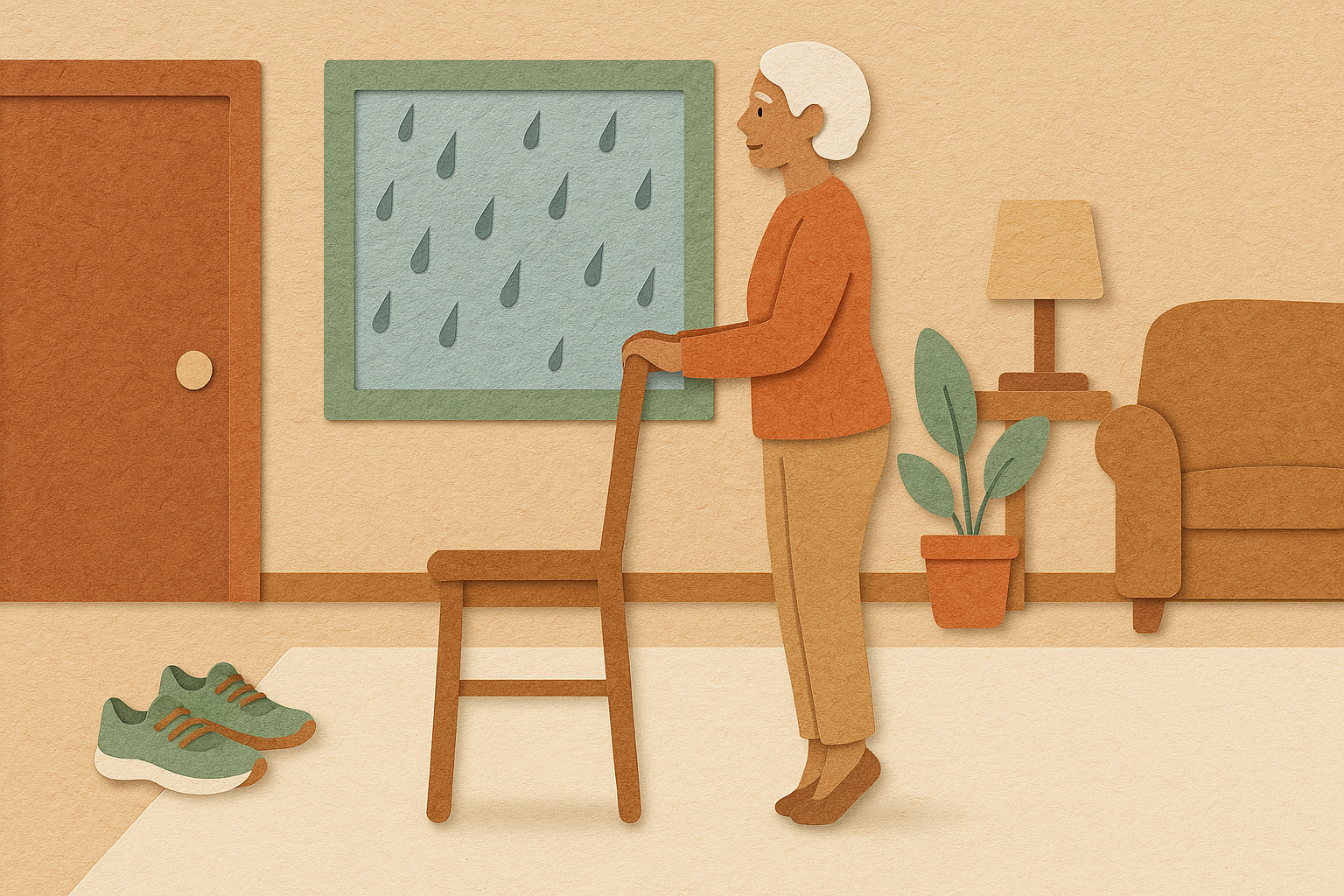
The walking shoes are by the door. They’ve been there for four days. Every morning you look outside, see a cold drizzle and a sky the color of dishwater, and decide that today isn’t the day.
That’s normal. Fall weather has a way of making the couch feel like the most reasonable place on earth. But for anyone trying to stay strong and steady as the years go by, a long stretch of sitting can undo a lot of good summer habits.
The answer isn’t a gym membership or an expensive machine. It’s a handful of simple ways to keep moving inside the house when the weather won’t cooperate.
Why Movement Matters More as Days Get Darker
Regular movement helps with the things most of us want more of as we get older: balance, strength, energy, sleep and a decent mood. That’s not news. What’s easy to forget is how quickly those benefits fade when we stop.
Fall and winter make stopping easy. Shorter days, cold mornings and slippery sidewalks all push us indoors, and indoors tends to mean sitting. A few weeks of that and getting up from a low chair can start to feel harder than it did in August.
The goal isn’t intense exercise. It’s keeping your body in the habit of moving every day, so spring doesn’t feel like starting over.
As always, if you have a health condition, a recent injury or you’re unsure what’s safe, check with your doctor before starting something new.
Walk Without Going Outside
Walking is still the simplest exercise there is, and you can do a surprising amount of it indoors.
Loop the house. Pick a route through your home, maybe kitchen to living room to hallway and back, and walk it at a brisk pace for ten minutes. Put on music or a podcast and it goes faster than you’d expect.
Use the stairs, carefully. If you have stairs and they’re safe for you, a few slow trips up and down are good for leg strength. Hold the railing every time.
Try a mall or big-store walk. Many shopping centers open their doors early for walkers. It’s flat, dry, well-lit, and usually has benches.
Walk during phone calls. Every call with a friend or family member is a chance to stand up and pace.
If walking is already part of your routine, our piece on why older adults should make walking a daily ritual has ideas for keeping it going through the colder months.
Strength Moves for the Living Room
Strength work doesn’t need weights. Your own body and a sturdy chair can do most of the job.
Sit-to-stands. Sit in a firm chair without arms. Stand up slowly without using your hands, if you can, then sit back down with control. Repeat a handful of times. This is one of the most useful moves there is, because it’s the same motion as getting out of a car or off the couch.
Wall push-ups. Stand an arm’s length from a wall, place your palms flat on it, and slowly bend your elbows to lean in, then push back. It’s gentle on wrists and shoulders.
Heel raises. Hold the back of a chair or the kitchen counter, rise up onto your toes, and lower slowly. Good for calves and ankles.
Soup can curls. Grab two cans from the pantry and do slow arm curls while watching the news.
Go slowly. Stop if anything hurts. Two or three short sessions a week is a fine start.
Balance Practice Is Worth Five Minutes
Balance tends to slip gradually over the years, often without you noticing, and it’s one of the most important things to protect. The good news is that it improves with practice, even small amounts.
Stand next to the kitchen counter, with a hand on it, and lift one foot slightly off the floor. Hold for a few breaths, then switch. As it gets easier, try lightly touching the counter with just a fingertip.
Another option is the heel-to-toe walk. Walk a few steps in a straight line, placing one heel directly in front of the other toes, like walking a tightrope. Keep a wall or counter within reach.
Many community centers and libraries offer gentle exercise or tai chi classes in the fall and winter. They’re often free or low-cost and have the bonus of getting you out of the house and around other people.
Use Technology Without Getting Stuck on It
A screen can be a good exercise partner. Plenty of free video workouts are designed for older adults, from chair exercises to gentle yoga. Search for the type you want, pick a short one, and follow along.
Smart speakers can also help. Ask for a timer to remind you to stand up every hour, or have it play a playlist that lasts exactly fifteen minutes so you know when your walk is done.
A step counter or fitness watch works for some people as a gentle nudge. For others, it turns into one more number to worry about. Use it if it helps, ignore it if it doesn’t.
If you want company, a regular video call with a friend where you both do the same short routine is a nice way to stay accountable.
Make Movement Part of the Day
The most reliable way to stay active through the gray months is to attach movement to things you already do. A few heel raises while the coffee brews. A loop of the house after lunch. Sit-to-stands during commercial breaks.
None of these feel like a workout, and that’s the point. They add up without requiring willpower or a change of clothes.
It also helps to start the day with a little light. Our article on making the most of morning light when fall days get shorter pairs well with an indoor movement routine. And for a broader set of ideas, see simple movement habits for aging well this fall.
Keep the Shoes by the Door
The weather will have its gray stretches. You can’t do much about that. What you can do is make sure those weeks don’t turn into a season of sitting.
A few minutes of walking, a few slow sit-to-stands, a moment of standing on one foot by the counter. It’s small stuff. But small stuff, done most days, is what keeps you ready for the first warm afternoon of spring, when those walking shoes finally get to go outside again.